Bir Tuwa (The Well of Tuwa)
Bir Tuwa (Arabic: بئر طوى) is a well next to which the Prophet ﷺ camped for one night, before bathing with its water the next morning, performing salah, and entering Makkah before carrying out the rites of Hajj. Historically, pilgrims would stay here overnight, bathe or do wudhu using its water, and then enter Makkah during the day. The Prophet ﷺ also alighted here during the Conquest of Makkah.
Table Of Content
The well was reportedly dug by Abd Shams bin Abd Manaf, the brother of Hashim bin Abd Manaf, the grandfather of the Prophet Muhammad ﷺ. It was later excavated by Aqil ibn Abi Talib M.

History
The Farewell Hajj
Before entering Makkah for his Farewell Hajj, the Prophet ﷺ encamped at Dhu Tuwa, known as Jarwal or Abar al-Zahir today, where he spent the night. On the morning of the 4th of Dhul Hijjah, the Prophet ﷺ performed Fajr salah near a large knoll close to the mosque that had been built there, rather than within the mosque itself. He then bathed himself using the water from the Bir Tuwa, as was his usual practice before entering Makkah.
This was also the practice of Abdullah ibn Umar I. Nafi ibn Abi Nu’aym V narrates:
Whenever ibn Umar approached (Makkah), he used to pass the night at Dhi Tuwa till dawn, and then he would enter Makkah. On his return, he used to pass by Dhi Tuwa and pass the night there till dawn, and he used to say that the Prophet ﷺ used to do the same.
[Narrated in Sahih al-Bukhari]
Conquest of Makkah
The Prophet ﷺ also stopped here during the Conquest of Makkah. Marching into Makkah, he led his army onward until they reached Dhu Tuwa. Upon reaching this point, he saw that Makkah stood before him without any opposing army to engage in battle. He stopped, ascended his mount, and gave thanks to God. Here, here he divided the Muslim army into battalions. The following morning, before entering the city, he drank from the well, performed wudhu, and then proceeded to enter Makkah.
The Presence of a Masjid

A mosque was also built here. Nafi reports:
Abdullah ibn Umar informed him that Allah’s Messenger ﷺ turned his face to the two hillocks which intervened between him and the long mountain by the side of the Kaaba, and the mosque which had been built there was thus on the left of the hillock. Allah’s Messenger’s ﷺ place of prayer was lower than the black hillock, at a distance of ten cubits or near it. He ﷺ would then observe prayer facing these two hillocks of the long mountain that is intervening between you and the Kaaba.
[Narrated in Sahih Muslim]
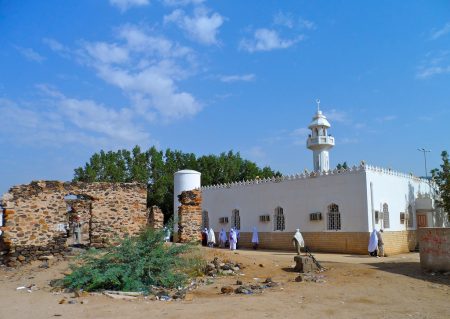
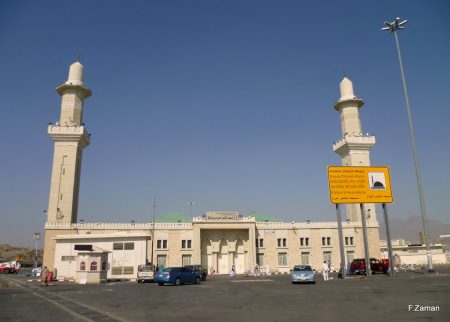
Abu Abdullah Fakihi, a 9th-century historian, also recorded in his work Akhbar Makkah that the masjid stood on the right side of the road leading to the Tuwa well, situated in its immediate vicinity. This mosque remained a fixture until recently when it was demolished.
Serving Pilgrims
Historically, the well was maintained and operated, with dedicated caretakers overseeing its upkeep. The caretakers were renowned for their service to pilgrims who came to visit the well. They would assist pilgrims by drawing water from the well, which they used for bathing and for wudhu.
Many pilgrims, particularly those from African and Moroccan backgrounds adhering to Imam Malik‘s teachings, prioritized visiting this well before entering Masjid al-Haram during Hajj or Umrah.
The district where the well is located is known as Jarwal, which was renowned for its souk. This marketplace attracted residents from all over Makkah. The souk had a diverse array of traders offering goods ranging from incense to fruits and vegetables. Additionally, it accommodated markets specialized in fodder, seeds, and sheep.
Today
During the Saudi era, the authorities made the decision to close Bir Tuwa to prevent pilgrims from using its water to bathe or do wudhu prior to their arrival at Masjid al-Haram.
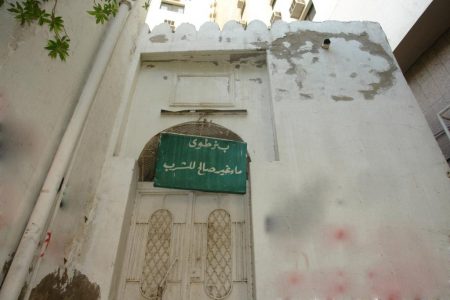
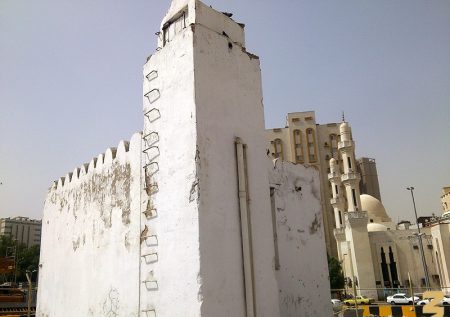
Presently, the well remains inaccessible, sealed off with an iron door. It is situated within the confines of an old building, believed to trace its origins back to the Ottoman era. The structure is still standing.
Photo Gallery