

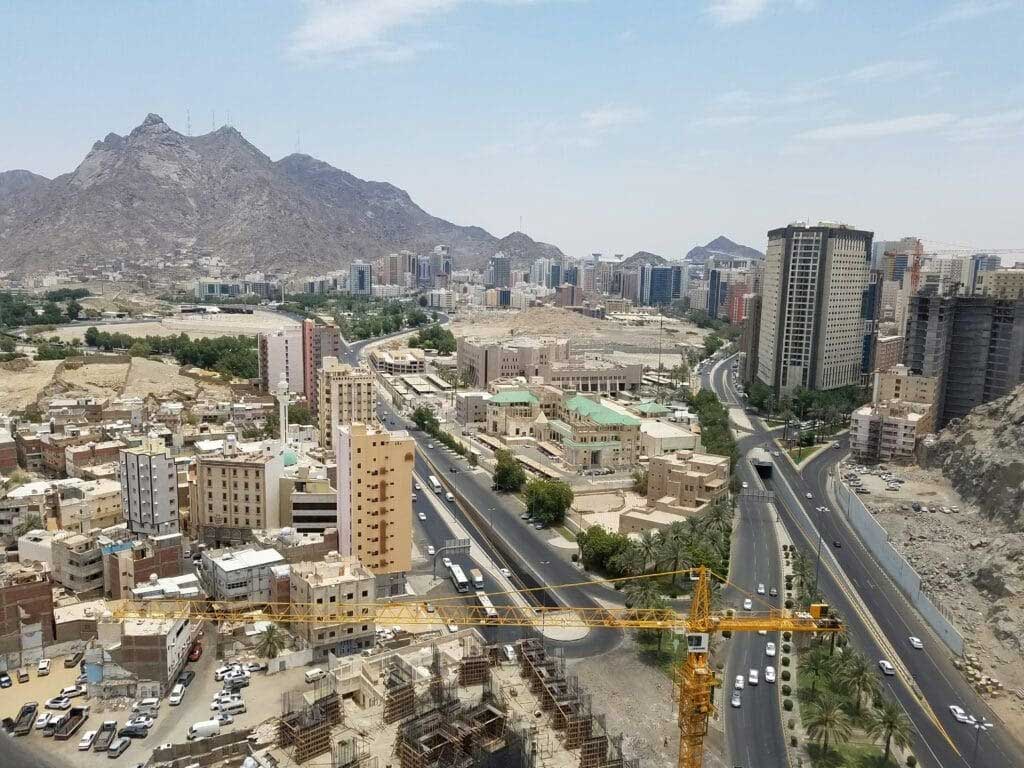
Wadi al-Muhassab
Wadi al-Muhassab (Arabic: وادي المحصب) is a valley where the Prophet ﷺ stopped, performed his prayers and rested when travelling from Mina to Makkah. It is located between the two. This location is also known as al-Ma’abdah (Arabic: المعابدة), al-Abtah (Arabic: الأبطح) or Khayf Bani Kinanah (Arabic: خيف بني كنانة).
Table Of Content
Names
Referred to as “al-Muhassab,” the area derives its name from the accumulation of stones carried down by water from neighbouring mountains. The name “al-Abtah” signifies a wide area after a valley. It is also named “Khayf Bani Kinanah”, named after one of the tribes that participated in the boycott against Banu Hashim, the Prophet Muhammad’s ﷺ tribe. Today, the area is known as “al-Ma’abdah”.
Significance
Due to its relatively flat terrain and lush surroundings, Muhassab became a favoured spot for relaxation and decision-making among the people of Makkah. It was here that the disbelievers of Makkah convened to impose a social boycott on the family of the Prophet ﷺ.
Initiated by the Quraysh, the disbelievers sought to isolate and ostracize the Prophet ﷺ and his family, imposing a social and economic blockade that lasted for three years. This boycott subjected the Banu Hashim to severe hardships, including deprivation of basic necessities and social isolation.
Later, the Prophet ﷺ and his companions M visited this site when Makkah was conquered and during the farewell Hajj. This transformation underscores the shift in its significance from being a venue for the disbelievers to display enmity towards Islam to becoming a symbol of Muslim strength and supremacy. The conquest of Makkah marked a momentous occasion for Muslims to express gratitude to Allah for granting them victory over a place from which they were once expelled. Furthermore, it provided an opportunity for the companions to respond to the torture and cruelty inflicted upon them by the disbelievers with compassion and forgiveness.
The Prophet’s Hajj ﷺ
During the Farewell Hajj on the 13th of Dhul Hijjah, after leaving Mina, the Prophet ﷺ stayed at Wadi al-Muhassab. It was the same place in which he encamped between the 4th and 8th of Dhul Hijjah, after having completed his Umrah. Here, he offered four prayers, then rested during part of the night. Anas ibn Malik I narrates:
The Prophet ﷺ offered the Dhuhr, Asr, Maghrib and Isha prayers and slept for a while at a place called al-Muhassab, before riding to the Kaaba and performing Tawaf round it.1Al-Bukhari, Hadith No. 1756; Abu Dawud, Hadith No. 2013.
Abdul Aziz ibn Rufai I narrates:
I asked Anas bin Malik: ‘Tell me what you remember from Allah’s Messenger ﷺ (regarding these questions): Where did he offer the Dhuhr and Asr prayers on the day of Tarwiya (8th day of Dhul Hijjah)?’ He replied, ‘At Mina.’ I asked, ‘Where did he offer the Asr prayer on the day of Nafr (i.e. departure from Mina)?’ He replied, ‘At Al- Abtah,’ and then added, ‘You should do as your leaders do.'2Al-Bukhari, Hadith No. 1653 & 1763; Muslim, Hadith No. 1309; al-Nasa’i, Hadith No. 2997; Abu Dawud, Hadith No. 1912.
Abu Rafi I, who was looking after the Prophet’s luggage, set up his tent in al-Muhassab. He reports:
Allah’s Messenger ﷺ did not command me to stop at al-Abtah when be departed from Mina, but I came and set up his tent of my own accord before he alighted here.3Muslim, Hadith No. 1313; Abu Dawud, Hadith No. 2009.
It was also the practice of some of the companions including Abu Bakr, Umar, Uthman, Ali and Abdullah ibn Umar M to alight in al-Muhassab after departing from Mina, where they would observe the prayers and rest for a period of time, as the Prophet ﷺ had done.4Muslim, Hadith No. 1310; Ibn Majah, Hadith No. 3069; al-Tirmidhi, Hadith No. 921.
The Prophet ﷺ chose to camp here, as he had also done after the conquest of Makkah because he wanted to show his gratitude to God after he was granted victory over the Quraysh and its allies of the Banu Kinanah who boycotted Banu Hashim, the Prophet’s own clan and Banu Muttalib, the clan of his relatives. It was a social and economic boycott, in which they specified that they would not trade nor intermarry with the Banu Hashim and Banu al-Muttalib until they handed over the Prophet ﷺ. Al-Muhassab was the very same place where the boycott was put into effect. Abu Huraira I narrates:
On the Day of Nahr at Mina, the Prophet ﷺ said: ‘Tomorrow we shall stay at Khayf Bani Kinanah where the pagans had taken an oath of disbelief.’ He meant (by that place) al-Muhassab where the Quraysh tribe and Bani Kinanah concluded a contract against Bani Hashim and Bani al-Muttalib that they would not intermarry with them or deal with them in business until they handed the Prophet ﷺ over to them.5Al-Bukhari, Hadith No. 1589, 1590,3058, 3882 & 7479; Ibn Majah, Hadith No. 2942.
Hafiz Ibn Kathir V provides further commentary on the wisdom behind the stay at al-Muhassab:
The Prophet ﷺ taught his companions that the last act a pilgrim is to undertake should be the Tawaf of the Kaaba, a fact the people were previously ignorant to, as Ibn Abbas alludes to. The Prophet ﷺ and his companions thus intended to perform the Tawaf, known as Tawaf al-Wida (the Farewell Tawaf). They left Mina after Zawwal, but by then there wasn’t enough time to journey to Makkah and perform Tawaf, nor was it possible to return to Madinah, for there was a great rush of people en route. Therefore, the Prophet ﷺ spent the night outside Makkah, at the place where the Quraysh took an oath against the Banu Hashim and Banu Muttalib. Allah prevented them from being successful. Rather, he humiliated and disappointed them by aiding his Prophet ﷺ and giving dominance to his mission, elevating his repute and completing the religion. On completing the Hajj, he returned here, where the Quraysh had vowed to oppress, wrong and alienate him.6Ibn Kathir, al-Bidayah wa al-Nihayah.
References
| ↑1 | Al-Bukhari, Hadith No. 1756; Abu Dawud, Hadith No. 2013. |
|---|---|
| ↑2 | Al-Bukhari, Hadith No. 1653 & 1763; Muslim, Hadith No. 1309; al-Nasa’i, Hadith No. 2997; Abu Dawud, Hadith No. 1912. |
| ↑3 | Muslim, Hadith No. 1313; Abu Dawud, Hadith No. 2009. |
| ↑4 | Muslim, Hadith No. 1310; Ibn Majah, Hadith No. 3069; al-Tirmidhi, Hadith No. 921. |
| ↑5 | Al-Bukhari, Hadith No. 1589, 1590,3058, 3882 & 7479; Ibn Majah, Hadith No. 2942. |
| ↑6 | Ibn Kathir, al-Bidayah wa al-Nihayah. |


