


Grave of Abdullah ibn Umar
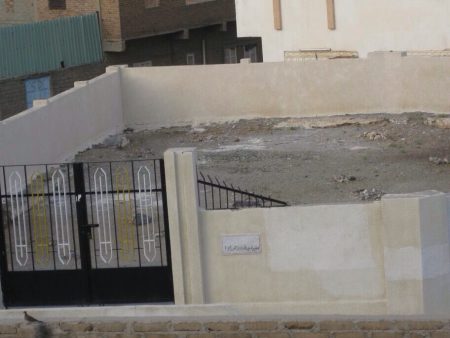
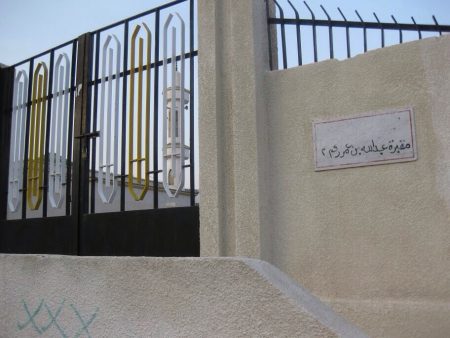
The Grave of Abdullah ibn Umar I (Arabic: قبر عبدالله بن عمر) is located in a residential area on the outskirts of Makkah. Abdullah ibn Umar was the brother-in-law of the Prophet Muhammad ﷺ, one of his greatest Companions, and the son of the second Caliph, Umar ibn al-Khattab I.
Table Of Content
- Early Life
- Conversion
- Migration
- Battles
- After the Death of the Prophet ﷺ
- His Family
- His Appearance
- His Piety
- Love for the Prophet ﷺ
- Prayer
- Charity
- Ascetism
- As a Narrator of Hadith
- Five Pillars of Islam
- Appearance of the Prophet ﷺ
- Prophetic Supplications
- As a Jurist
- His Death
- How to Visit the Grave
- Photo Gallery
Abdullah ibn Umar was among the younger generation of Companions who played significant roles in early Islamic history. He was renowned for his involvement in issuing fatwas (legal opinions) and for his meticulous narration of Hadith.
He exemplified a life deeply influenced by the teachings and practices of Prophet Muhammad ﷺ. Renowned for his adherence to the Prophetic way of life, he became a role model for many. He attracted numerous students seeking knowledge of Hadith and jurisprudence in Madinah and those seeking his counsel on religious matters. His reputation for generosity, particularly in giving charity, and his ascetic lifestyle made him a revered figure among both scholars and the community.
Ibn Umar’s life was marked by significant events alongside Prophet Muhammad ﷺ and continued even after the Prophet’s ﷺ passing. He actively participated in the conquests of various regions, including the Levant, Iraq, Persia, Egypt, and Africa, following the Prophet’s ﷺ demise. However, when internal conflicts arose, such as the turmoil following the assassination of Uthman ibn Affan I, he chose to abstain from involvement in the strife. His decision stemmed from a commitment to avoid contributing to the bloodshed among Muslims.
Throughout his life, ibn Umar commanded immense respect and trust from the Muslim community. Uthman ibn Affan sought to appoint him as a judge, Ali ibn Abi Talib I offered him the governorship of the Levant, and Abu Musa al-Ash’ari I nominated him for the caliphate during the arbitration between the armies of Ali and Muawiyah L. Despite these offers, he declined them all, avoiding entanglement in political matters. His primary concern remained to uphold the unity and welfare of the Muslim ummah,
Early Life
His full name was Abu Abdul Rahman ibn Umar ibn al-Khattab ibn Nufayl ibn Abdul-Uzza ibn Rayah ibn Qart ibn Razah ibn Adi ibn Kaab al-Qurashi. He was born in Makkah 10 years before the Prophet’s ﷺ migration to Madinah (610 CE).
He was the son of the Companion and second caliph, Umar ibn al-Khattab I. His mother, Zaynab bint Mazun al-Jumahiyah, was the sister of another Companion, Uthman ibn Mazun J. Ibn Umar had two full siblings: Hafsa J, who became the fourth wife of the Prophet ﷺ and Abdul Rahman I. Additionally, he had paternal half-brothers from his father’s marriage to Umm Kulthum bint Jarwal, named Zayd and Ubayd Allah. Although Abdullah ibn Umar also had another stepmother named Qurayba bint Abi Umayya, she did not have any children of her own M.
Conversion
Abdullah ibn Umar embraced Islam as a child in Makkah alongside his father, although his exact age at the time of his conversion is debated. Despite being young, ibn Umar vividly recalled accompanying his father when he publicly declared his conversion to Islam. He later affirmed, “Although I was very young at the time, I understood everything I saw.” His mother, Zaynab, also embraced Islam, while his two stepmothers did not.
Migration
Ibn Umar’s family migrated to Madinah in 622 CE, although there’s speculation that he might have arrived before his father. Upon migrating, he immediately integrated into the Muslim community, aligning himself closely with the Prophet ﷺ and his Companions.
Battles
When the Prophet called for volunteers to join the Battle of Badr in 3 AH (625 CE), ibn Umar eagerly offered himself despite his youth. However, due to his age, the Prophet ﷺ declined his participation, a decision repeated during the Battle of Uhud. It wasn’t until the Battle of the Trench, when Abdullah ibn Umar was 15 years old, that the Prophet ﷺ finally allowed him to join the ranks. This account was relayed by ibn Umar’s mentor, Nafi’ I, who narrated the events as recounted by ibn Umar himself. He said:
Allah’s Messenger ﷺ called me to present myself in front of him or the eve of the battle of Uhud, while I was 14 years of age at that time, and he did not allow me to take part in that battle, but he called me in front of him on the eve of the battle of the Trench when I was 15 years old, and he allowed me (to join the battle).” Nafi’ said, ‘I went to Umar ibn Abdul Aziz who was Caliph at that time and related the above narration to him, He said, ‘This age (fifteen) is the limit between childhood and manhood,’ and wrote to his governors to give salaries to those who reached the age of fifteen.
[Narrated in Sahih al-Bukhari]
From that moment, ibn Umar became a witness to numerous significant events alongside Prophet ﷺ. He observed the Pledge of Allegiance (Bay’at al-Ridwan) at Hudaibiyah, the Expedition of al-Muraysi, the Conquest of Makkah and the Battle of Mu’tah.
After the Death of the Prophet ﷺ
After the passing of Prophet Muhammad ﷺ, ibn Umar played a significant role in the expansion of the Islamic empire. He participated in the conquests of various regions, including the Levant, Iraq, Persia, Egypt, and Africa. During these campaigns, he witnessed pivotal battles such as the Battle of Yarmouk, the Conquest of Nahavand, and engagements in modern-day Azerbaijan.
Following his return to Madinah, the third Caliph, Uthman ibn Affan, sought ibn Umar’s service in the judiciary, but he respectfully declined. However, when Uthman faced siege during internal strife, ibn Umar defended him bravely, wielding his father’s sword on the battlefield.
Upon Uthman’s assassination and the ensuing discord over the succession, ibn Umar refused to take sides in the conflict between Ali ibn Abi Talib and Muawiyah ibn Abi Sufyan L. Despite Ali’s invitation for him to lead in the Levant, ibn Umar chose to reside in Makkah, abstaining from involvement in the wars between Ali and his adversaries.
Even when urged to take leadership by factions who viewed him favourably, ibn Umar staunchly rejected, prioritizing the avoidance of bloodshed among Muslims. He emphasized the need for unity and peace within the Ummah, reflecting on the futility of power struggles and worldly pursuits that fuelled discord among the Companions.
His Family
After his father became Caliph in 13 AH (634 CE), ibn Umar married Safiya bint Abu Ubayd. Together, they had seven children: Abu Bakr, Abu Ubayda, Abdullah, Waqid, Umar, Hafsa, and Sawda M.
Additionally, he had several more children in subsequent marriages, including Abd al-Rahman, Salim, Ubayd Allah, Hamzah, Zayd, Aysha, Abu Salamah, Qulaba and Bilal M.
His Appearance
Ibn Umar was described as a tall and imposing figure with a bald head. Known for his fondness for fragrance, he often applied oil and perfume before attending Friday prayers or Eid. He possessed a ring engraved with his name, “Abdullah ibn Umar,” which he entrusted to his son, Abu Ubayda. When needing to affix a seal, ibn Umar would retrieve and use the ring for that purpose.
His Piety
Many of the Sahabah and Tabi’un greatly admired ibn Umar, considering him unparalleled in righteousness and virtue. They revered him as a paragon of piety and sincerity.
Even when compared to his father, Umar, many acknowledged Abdullah ibn Umar’s unique virtues, noting that while Umar lived among contemporaries of similar stature, Abdullah ibn Umar stood out in a time when he had no equals. Muhammad ibn al-Hanafiyyah, the son of Ali ibn Abi Talib L, acclaimed him as the finest among his generation.
Love for the Prophet ﷺ
Abdullah ibn Umar made earnest efforts to emulate every act of worship he had witnessed or heard from the Prophet ﷺ. His love for the Prophet ﷺ extended to meticulously following his every action and instruction. This commitment led him to travel to various locations where the Prophet ﷺ had rested and prayed, intending to offer his prayers there as well.
Aisha bint Abi Bakr J, the beloved wife of the Prophet ﷺ, remarked that no one adhered to the Prophet’s ﷺ footsteps in their homes as diligently as Abdullah ibn Umar did. His servant Nafi’ recounted how he would pray in every place the Prophet Muhammad ﷺ had prayed, even tending to a tree under which the Prophet ﷺ had once sought shade. Ibn Umar would ensure the tree remained nourished, demonstrating his commitment to preserving the Prophet’s ﷺ legacy.
Upon returning from his travels, ibn Umar would first visit the graves of Prophet Muhammad ﷺ, Abu Bakr, and his father Umar L, giving them salam before returning to his home.
Prayer
Abdullah ibn Umar’s devotion was deeply admired by those around him. Nafi’ recounted an incident where ibn Umar was moved to tears while reciting a verse from the Quran. Despite his elevated status, he remained humble and committed to his worship, prioritizing the remembrance of God.
Additionally, ibn Umar’s devotion to prayer was noted by Tawus ibn Kaysan I, who remarked on his exceptional focus and alignment towards the Qibla during prayers. Ibn Umar also emphasized the importance of beginning interactions with the Islamic greeting of peace.
He frequently embarked on Hajj and Umrah and is reported to have performed Hajj 60 times. Before carrying out the pilgrimage, he would stay near the Well of Tuwa before entering the city. He would also instruct his Companions to do the same.
Nafi ibn Abi Nu’aym I narrates:
Whenever ibn Umar approached (Makkah), he used to pass the night at Dhi Tuwa till dawn, and then he would enter Makkah. On his return, he used to pass by Dhi Tuwa and pass the night there till dawn, and he used to say that the Prophet ﷺ used to do the same.
[Narrated in Sahih al-Bukhari]
Charity
Ibn Umar’s charitable nature was exemplified in his interactions with others. He generously distributed food and provisions to large gatherings, ensuring everyone was cared for. On one occasion, he distributed thirty thousand meals in a single gathering. He was known to provide for the needs of his slaves and free them if he found them deserving.
Ascetism
In matters of Dunya, Abdullah ibn Umar upheld a remarkable sense of asceticism. He never asked for money, yet he did not refuse gifts from rulers, accepting them graciously. His focus remained steadfastly on matters of the spiritual realm rather than worldly concerns.
His commitment to asceticism and detachment from worldly desires earned him widespread admiration among his contemporaries. Abdullah ibn Masud I attested to Abdullah ibn Umar’s remarkable ability to resist the allure of worldly pleasures, highlighting his strength of character and self-discipline.
Jabir ibn Abdullah I echoed similar sentiments, noting that while others among them were swayed by worldly temptations, ibn Umar remained steadfast and unyielding in his devotion to a simpler and more spiritual way of life.
Aisha J also praised ibn Umar’s dedication to matters of the hereafter over worldly pursuits.
As a Narrator of Hadith
Abdullah ibn Umar was renowned for his extensive narration of Hadiths attributed to Prophet Muhammad ﷺ. Despite the abundance of Hadiths he transmitted, he was extremely careful in his commitment to accuracy and integrity in preserving their texts. Muhammad al-Baqir I lauded his meticulous approach, stating that when ibn Umar heard a Hadith from the Prophet ﷺ, he neither added nor omitted any part, setting a standard of reliability unparalleled by others.
The significance of ibn Umar’s contribution to Hadith transmission is evident in the numerous compilations that include his narrations. For instance, Baqi ibn Mukhlad documented 2,630 narrations transmitted by ibn Umar, making him the second most prolific narrator of Hadith. Moreover, ibn Umar’s narrations feature prominently in the works of Bukhari and Muslim, two of the most respected compilers of Hadith collections. Both Bukhari and Muslim included 168 Hadiths narrated by ibn Umar.
Five Pillars of Islam
Indeed, one of his most famous narrations is the Hadith, which enumerates the “Five Pillars of Islam.” This Hadith is recorded in both Sahih Bukhari and Sahih Muslim. He narrates:
The Messenger of Allah ﷺ said, ‘(The structure of) Islam is built on five (pillars): Testification of ‘La ilaha illallah’ (none has the right to be worshipped but Allah), that Muhammad ﷺ is his slave and Messenger, the establishment of Salat, the payment of Zakat, the pilgrimage to the House of Allah (Ka’bah), and Sawm during the month of Ramadan.’
[Narrated in Bukhari and Muslim]
The Hadith outlines the fundamental principles and practices that constitute the foundation of Islam. These five pillars are:
- Shahada (Testimony of Faith): Declaring the oneness of God and the prophethood of Muhammad ﷺ.
- Salah (Prayer): Performing the obligatory prayers at prescribed times throughout the day.
- Zakat (Almsgiving): Giving a portion of one’s wealth to those in need as a form of charity.
- Sawm (Fasting): Observing fasting during the month of Ramadan.
- Hajj (Pilgrimage): Undertaking the pilgrimage to Makkah at least once in a lifetime for physically and financially able people.
Additionally, it holds a significant place in “The Forty Hadith of Imam al-Nawawi,” a compilation noted for its concise and comprehensive selection of prophetic teachings.
Appearance of the Prophet ﷺ
Another one of his famous narrations is from the Shama’il of Imam al-Tirmidhi, which portrays ibn Umar’s keen observation of Prophet Muhammad ﷺ. In this narration, ibn Umar, as a young man, recalls closely observing the Prophet ﷺ, even to the extent of counting the number of white hairs on his head. He narrated:
The white hair of the Prophet ﷺ numbered approximately twenty.
[Narrated in Sunan ibn Majah]
Prophetic Supplications
Abdullah ibn Umar also transmitted numerous famous du’as attributed to the Prophet ﷺ. These include prayers for various occasions, such as morning and evening, entering and leaving the home, eating, sleeping, seeking protection, and seeking forgiveness, among others.
Following are some of these du’as transmitted by Abdullah ibn Umar that the Prophet ﷺ would recite in the morning and evening, as recorded in Sunan Abu Dawud:
Allāhumma innī asaluka l-ʿāfiyata fi d-dunyā wa l-ākhirah
O Allah, I ask You for security in this world and in the Hereafter.
Allāhumma innī asaluka l-ʿafwa wa l-ʿāfiyata fī dīnī wa dunyā wa ahlī wa mālī
O Allah! I ask You for forgiveness and security in my religion and my worldly affairs, in my family and my property.
Allāhumma s-tur ʿawrātī wa amin rawʿātī
O Allah! conceal my faults, and keep me safe from the things which I fear.
Allāhumma aḥfaẓnī min bayni yaday wa min khalfī wa ʿan yamīnī wa ʿan shimālī wa min fawqī wa aʿūdhu bi ʿaẓamatika an ughtāla min taḥtī
O Allah! guard me in front of me and behind me, on my right hand and on my left, and from above me, and I seek in Your greatness from receiving unexpected harm from below me.
As a Jurist
The opinions and insights of ibn Umar were held in high esteem by scholars and Companions alike. Malik ibn Anas I highlighted Abdullah’s extensive experience and expertise, noting that he spent 60 years providing legal rulings (fatwas) to the people, making him a great authority in matters of Islamic jurisprudence.
Ibn Umar approached the issuance of legal rulings (fatwas) with meticulous care and caution. According to Nafi’, during the Hajj season, ibn Umar and Abdullah ibn Abbas L would convene to address the people’s queries. While ibn Abbas readily answered and issued fatwas on various matters, ibn Umar took a more reserved approach, responding sparingly.
In formulating his fatwas, ibn Umar relied primarily on three sources: the Quran, the Sunnah of Prophet Muhammad ﷺ and the consensus of the major Companions. If these sources did not provide a clear directive, he would then exercise his judgment, drawing upon his understanding of the principles of jurisprudence and the teachings of his predecessors. Although ibn Umar was deeply influenced by his father’s jurisprudential approach, he also maintained independence in his legal reasoning, especially when he perceived a difference of opinion or a need to diverge from his father’s stance.
Ibn Hazm, in his book “Al-Ahkam fi Usul,” notes the significance of fatwas transmitted from a select group of Companions. This group, consisting of ibn Umar, Umar, Ali, Aisha, ibn Masud, ibn Abbas, and Zaid ibn Thabit M, held special prominence due to the wealth of legal rulings attributed to them. Ibn Hazm remarked that a substantial volume of fatwas could be compiled from each of these Companions.
His Death
Abdullah ibn Umar passed away in Makkah at age 84 in either 73 AH (692 CE) or 74 AH (693 CE). Al-Hajjaj ibn Yusuf al-Thaqafi led the funeral prayer. He was laid to rest in the Muhajireen Cemetery. Other sources indicate he was buried in a grave towards Dhi Tuwa, while others suggest he was buried at al-Muhassab.
How to Visit the Grave
If you intend to visit Abdullah ibn Umar’s grave, you can take a taxi from Masjid al-Haram or Masjid Aisha. It is situated between the two sites. From Masjid al-Haram, it’s about 5 kilometers away and takes about 10 minutes to reach by taxi. It also takes about 10 minutes from Masjid Aisha. While some taxi drivers may not know the grave’s exact location, others will be familiar with it. You should be able to find a taxi driver who can take you there.
Photo Gallery



Assalamu Alaikum,
I am very thankful for these information with pointed map location. I am living in Saudi Arabia since many years and alwas wanted such places location information.
JazakAllah