


Masjid al-Hudaibiyah
Table Of Content
Significance
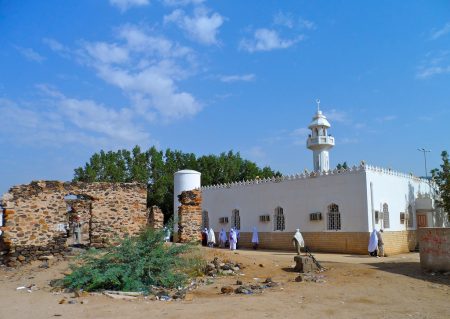
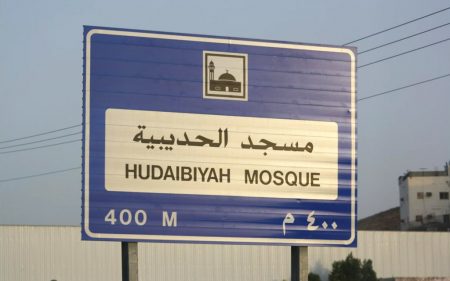
Masjid al-Hudaibiyah is situated near Makkah, along the old Jeddah Road, in an area now recognized as al-Shumaisi, approximately 24 kilometres from Masjid al-Haram.
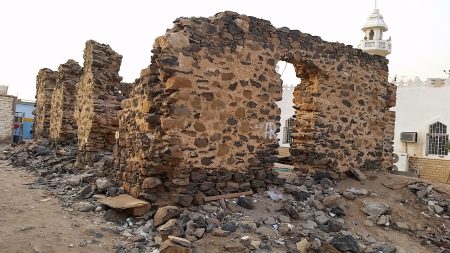
This mosque, also known as “Masjid al-Shumaisi,” is one of the Miqat points for those already inside the Haram area. A site of great importance, al-Hudaibiyah has served as a crucial stopover for pilgrim caravans journeying to Makkah throughout the ages. Next to the mosque are the remains of an old stone structure dating back to the Ottoman era.
In this area, there are three significant places:
- The place where the Treaty of al-Hudaibiyah was concluded with the Quraysh.
- A tree under which Bay’at al-Ridwan took place.
- A well where the Prophet Muhammad ﷺ performed the miracle of causing water to overflow, providing sustenance for 1,500 Companions and their animals.
History
The year 6 AH (642 CE) witnessed two pivotal events in the history of Islam: Bay’at al-Ridwan (“The Covenant of Pleasure”) and the Treaty of al-Hudaibiyah. These events hold significant importance as they served as the foundation for future victories and conquests. Initially, the Treaty of al-Hudaibiyah may have appeared disadvantageous to the Muslims, but Allah bestowed upon it the title “Fath Mubin” (a Manifest Victory):
نَّا فَتَحْنَا لَكَ فَتْحًۭا مُّبِينًۭا
Verily, We have given you (O Muhammad صلى الله عليه وسلم) a manifest victory.
[Surah al-Fath, 48:1]
It had been six years since the Prophet ﷺ migrated to Madinah. After being barred from entering Masjid-al Haram by the Quraysh disbelievers, the Muslims yearned to visit the Kaaba.
One day, while gathered in Masjid al-Nabawi, the Messenger of Allah ﷺ informed the Companions of a vision he had seen, wherein they would enter the sacred sanctuary of Makkah securely, with shaven heads, unarmed, and without fear for their safety. Upon hearing this news, the Muslims expressed gratitude to Allah for His grace and eagerly spread the glad tidings throughout Madinah. However, the means by which this vision would be realized remained a mystery to them.
In Dhu al-Qa’dah 6 AH, the Prophet ﷺ, accompanied by about 1500 Companions, prepared for the journey to perform Umrah. They donned the ihram and set out to Makkah. Aware of the potential obstacles ahead, the Prophet ﷺ sent a member of the Khuza’ah tribe ahead to gather intelligence on the movements of the disbelievers of Makkah.
Upon reaching Usfan, the messenger returned with troubling news: the disbelievers of Makkah, along with the tribes of other Arabs, had united to prevent the Muslims from entering Makkah.
The disbelievers of Makkah, supported by their allied tribes, had assembled an army to bar the Muslims from entering the city. This formidable force advanced to Baldah and established their camp there. Meanwhile, Khalid ibn al-Walid and Ikrimah ibn Abi Jahl L, leading a contingent of 200 elite soldiers, rode swiftly to al-Ghamim on horseback.
Upon sighting the approaching battalion on the horizon, the Messenger of Allah ﷺ instructed his Companions to alter their course, taking a less-travelled route. Eventually, they reached al-Hudaibiyah, where they set up camp, heeding the Prophet’s ﷺ guidance.
At al-Hudaibiyah
Upon reaching the plain of al-Hudaibiyah, the she-camel of the Messenger of Allah ﷺ, named al-Qaswa, came to a halt. Initially, the Muslims assumed it was due to exhaustion. However, the Prophet explained that it was halted by the same power that prevented the elephant in the army of Abraha from entering Makkah.
Al-Miswar ibn Makhrama and Marwan L narrated:
The Prophet ﷺ went on advancing till he reached the Thaniya (i.e. a mountainous way) through which one would go to them (i.e. people of Quraysh). The she-camel of the Prophet ﷺ sat down. The people tried their best to cause the she-camel to get up but in vain, so they said, Al-Qaswa (i.e. the she-camel’s name) has become stubborn! Al-Qaswa has become stubborn!’ The Prophet ﷺ said, Al-Qaswa has not become stubborn, for stubbornness is not her habit, but she was stopped by Him Who stopped the elephant.’
[Narrated in Sahih al-Bukhari]
A Miracle of the Prophet ﷺ
At al-Hudaibiyah, water was scarce, with a well providing only temporary relief before running dry. In response to the Companions’ thirst, the Messenger of Allah ﷺ performed a miraculous deed: he placed his blessed hands in a bowl, from which water gushed forth from his blessed fingers. Following this, he poured the remaining water from his wudhu into the well, causing it to overflow instantly. This miraculous act ensured an abundant water supply for the entire army and their livestock throughout their stay at al-Hudaibiyah.
Salim ibn Abi al-Ja’d narrates that Jabir bin Abdullah L said:
The people became very thirsty on the day of Al-Hudaibiyah. A small pot containing some water was in front of the Prophet ﷺ and when he had finished the ablution, the people rushed towards him. He asked, ‘What is wrong with you?’ They replied, ‘We have no water either for performing ablution or for drinking except what is present in front of you.’ So he placed his hand in that pot and the water started flowing among his fingers like springs. We all drank and performed ablution (from it).” I asked Jabir, ‘How many were you?’ he replied, ‘Even if we had been one hundred thousand, it would have been sufficient for us, but we were fifteen hundred.’
[Narrated in Sahih al-Bukhari]
Bay’at al-Ridwan
While stationed at al-Hudaibiyah, the Messenger of Allah ﷺ observed the formidable preparations of the Quraysh, who were ready for war with a vast army, while the Muslims were clad in the ihram garments for Umrah. In the sacred state of Ihram, even harming an insect is prohibited, let alone engaging in battle.
Recognizing this delicate situation, the Messenger of Allah ﷺ decided that it would be prudent to negotiate a settlement with the disbelievers of Makkah rather than resort to armed conflict. Initially, he chose Umar I to undertake this task. Umar, upon realizing the gravity of the situation and the lack of support from his tribe in Makkah, respectfully declined, citing the formidable opposition he would face from his enemies among the Quraysh.
Umar then suggested to the Messenger of Allah ﷺ to send Uthman I to propose a peace treaty. Consequently, the Messenger of Allah ﷺ chose Uthman for this important mission. Upon arriving in Makkah, Uthman conveyed the Prophet’s ﷺ proposal for a peace treaty to the disbelievers. Due to his good character and benevolence toward his fellow tribesmen, Uthman enjoyed great honour and respect among the Quraysh. As a result, they refrained from causing him any harm and permitted him to perform Umrah without hindrance.
However, they adamantly refused to allow the Prophet Muhammad ﷺ to approach the Kaaba. In response, Uthman firmly asserted his loyalty to the Prophet ﷺ and his commitment to performing Umrah only in the presence of the Messenger of Allah ﷺ.
As the debate between Uthman and the Quraysh intensified, tensions rose, ultimately leading to his temporary detention in Makkah. Meanwhile, back at the camp in al-Hudaibiyah, a rumour began circulating among the companions that Uthman had been slain by the Quraysh.
Upon hearing the disturbing rumours of Uthman’s potential martyrdom, the Messenger of Allah ﷺ expressed grave concern. He declared, “If Uthman has truly been martyred, then avenging his martyrdom is obligatory.”
Subsequently, the Messenger of Allah ﷺ gathered his companions beneath a mimosa tree, urging them to pledge unwavering loyalty and support to him until their last breath. In response, every companion present extended their hand in solemn commitment, marking the establishment of the Bay’at al-Ridwan.
Allah mentions this event and the tree under which it transpired in the Quran:
إِنَّ ٱلَّذِينَ يُبَايِعُونَكَ إِنَّمَا يُبَايِعُونَ ٱللَّهَ يَدُ ٱللَّهِ فَوْقَ أَيْدِيهِمْ ۚ فَمَن نَّكَثَ فَإِنَّمَا يَنكُثُ عَلَىٰ نَفْسِهِۦ ۖ وَمَنْ أَوْفَىٰ بِمَا عَـٰهَدَ عَلَيْهُ ٱللَّهَ فَسَيُؤْتِيهِ أَجْرًا عَظِيمًۭا
Those who pledge loyalty to you [Prophet] are actually pledging loyalty to God Himself – God’s hand is placed on theirs – and anyone who breaks his pledge does so to his own detriment: God will give a great reward to the one who fulfils his pledge to Him.
[Surah al-Fath, 48:10]
In Surah Al-Fath, Allah praises the Companions who pledged allegiance at Hudaibiyah:
لَّقَدْ رَضِىَ ٱللَّهُ عَنِ ٱلْمُؤْمِنِينَ إِذْ يُبَايِعُونَكَ تَحْتَ ٱلشَّجَرَةِ فَعَلِمَ مَا فِى قُلُوبِهِمْ فَأَنزَلَ ٱلسَّكِينَةَ عَلَيْهِمْ وَأَثَـٰبَهُمْ فَتْحًۭا قَرِيبًۭا
God was pleased with the believers when they swore allegiance to you [Prophet] under the tree: He knew what was in their hearts and so He sent tranquillity down to them and rewarded them with a speedy triumph.
[Surah al-Fath, 48:18]
For this reason, this oath of allegiance became known as Bay’at al-Ridwan (The Allegiance of Allah’s Pleasure).
Jabir I narrated that the Messenger of Allah ﷺ said:
None of those who gave the pledge under the tree shall enter the Fire.
[Narrated in al-Tirmidhi]
After the Muslims finalized their covenant, the Messenger of Allah ﷺ extended the same commitment on behalf of Uthman, invoking, “O Allah! Indeed, Uthman is devoted to Your service and the service of Your Messenger.” Uthman’s presence at Bay’at al-Ridwan was acknowledged. Shortly after this event, it was discovered that the rumours of Uthman’s martyrdom were unfounded. He was subsequently released by his captors and reunited with the Messenger of Allah ﷺ.
The Treaty of Hudaibiyah
The Treaty of al-Hudaibiyah occurred after communication brought by Budayl ibn Warqa’ al-Khuza’i, along with some of his tribesmen, to the Messenger of Allah ﷺ. Despite their tribe, the Banu Khuza’ah, not having embraced Islam yet, they were still allies and sincere supporters of the Prophet ﷺ. Budayl informed the Prophet Muhammad ﷺ that the leaders of Quraysh had amassed a significant army with the intention of preventing the Muslims from reaching the Holy Kaaba. The Quraysh’s forces were well-equipped for battle, including ample provisions and livestock.
In response, the Messenger of Allah ﷺ emphasized to Budayl that the Muslims had no intention of fighting and were solely focused on performing Umrah. He proposed to Budayl to convey a message to the Quraysh, suggesting that instead of engaging in conflict, it would be more beneficial for both parties to agree to a truce for a specified period. However, the Prophet ﷺ also made it clear that if the Quraysh insisted on fighting, he and the Muslims were prepared to defend themselves until the last breath.
Upon receiving permission from the elder and wiser statesmen of Quraysh, Budayl conveyed the message from the Messenger of Allah ﷺ, despite opposition from some young tribesmen of Quraysh who were vehemently against hearing the message.
After hearing the proposal, Urwah ibn Mas’ud al-Thaqafi, a prominent leader of the Quraysh, stood up and addressed his people, emphasizing their familial bonds and his own integrity. He requested permission to discuss the details of the proposal with the Messenger of Allah ﷺ, which the Quraysh granted.
Upon meeting the Prophet Muhammad ﷺ, Urwah expressed scepticism about the intentions of the Muslims and warned against engaging in a battle. He also expressed doubt about the loyalty of some individuals in the Muslim army. This angered Abu Bakr al-Siddiq I, who staunchly defended the Prophet Muhammad ﷺ.
During his dialogue with the Prophet Muhammad ﷺ, Urwah arrogantly tugged at the Prophet’s ﷺ beard several times, considering himself authoritative. This act provoked al-Mughirah ibn Shu’bah I. Unable to tolerate the disrespect, al-Mughirah struck Urwah’s hand with his sheath and admonished him to refrain from touching the Prophet’s blessed beard. Urwah, recognizing al-Mughirah, accused him of betrayal, citing a past incident where he had assisted al-Mughirah despite his transgression.
Upon his return to the Quraysh, Urwah conveyed his observations to them, marvelling at the profound obedience the Companions showed to the Prophet Muhammad. He described how even the Prophet’s ﷺ saliva was esteemed by his followers, who would eagerly receive it out of love and respect. He said:
To my people! By Allah! If Muhammad ﷺ were to spittle, it wouldn’t touch the ground but would land on the hand of one of his Companions, who, out of love and reverence, would use it to wipe his face and body. Whenever Muhammad ﷺ commands, every single Companion rushes to fulfil it. They even compete to obtain the leftover water from his wudhu to the point where swords might be drawn in contention. When Muhammad ﷺ speaks, his Companions fall silent, listening intently. Such is their reverence that none dares to meet his gaze directly. I have visited the courts of kings like Caesar, Khosrau, and the Abyssinian Emperor, but I swear by Allah! I’ve never witnessed servants showing greater respect to a king than the Companions show to Muhammad ﷺ.
Inspired by Urwah’s account, Hulays ibn Alqamah, representing the tribe of Banu Kinanah, sought permission from the Quraysh to visit the Messenger of Allah ﷺ. Upon witnessing the Muslims in ihram attire and with sacrificial animals, he was deeply moved and concluded that they must not be prevented from visiting the Kaaba.
Another envoy from the Quraysh, Suhayl ibn Amr, was then dispatched to negotiate terms for a peace treaty between the two parties.
Upon his arrival, Suhayl invited the Prophet Muhammad to negotiate and draft an agreement. Accepting the offer, the Messenger of Allah ﷺ called upon Ali I to document the terms. Extensive discussions ensued between the Messenger of Allah ﷺ and Suhayl ibn Amr, leading to the finalization of specific provisions.
The Messenger of Allah ﷺ instructed Ali to commence writing with the following:
بِسْمِ اللَّهِ الرَّحْمَـٰنِ الرَّحِيمِ
In the Name of Allah, the Most Gracious, the Ever Merciful.
Suhayl raised an objection, stating, “Regarding ‘al-Rahman,’ I am unfamiliar with its meaning. Instead, write:
بِاسْمِكَ اللَّهُمَّ
In Your Name, O Allah.
…a statement agreed upon by both you and me.”
The Muslims, however, insisted that:
بِسْمِ اللَّهِ الرَّحْمَـٰنِ الرَّحِيمِ
Is what shall be written, with nothing else to replace it.
The Messenger of Allah ﷺ, however, instructed Ali to write:
بِاسْمِكَ اللَّهُمَّ
And thereafter the following:
هَـذَا مَا قَاضَي عَلَيْهِ مُحَمَّدٌ رَسُولُ اللهِ
These are the conditions of a truce agreed upon by Muhammad, the Messenger of Allah.
Suhayl once more interjected, saying, “By Allah! Had we acknowledged you as the Prophet of Allah, we wouldn’t have barred your access to the Kaaba nor would we have engaged in combat against you. Therefore, instead of inscribing ‘Messenger of Allah,’ you should inscribe:”
مُحَمَّد ابْن عَبْدِ اللهَ
Muhammad, the son of Abdullah.
The Messenger of Allah ﷺ responded firmly, “By Allah! I am indeed Muhammad, the Messenger of Allah, and Muhammad, the son of Abdullah. However, you reject my role as the Messenger of Allah.”
Instructing Ali to make a change, the Prophet ﷺ directed him to replace the phrase “Muhammad, the Messenger of Allah” with “Muhammad ibn Abdullah.”
Ali respectfully stated, “O Messenger of Allah ﷺ, I cannot bring myself to erase your esteemed name!”
The Prophet ﷺ then requested to be shown where the phrase was written. After Ali pointed this out, the Prophet ﷺ himself removed the words “Messenger of Allah” from the document.
Terms of the Treaty
The terms of the treaty were as follows:
- Immediate cessation of hostilities for a period of ten years between the Muslims and the Quraysh.
- Muslims to return to Madinah without performing Umrah that year.
- Muslims permitted to perform Umrah the following year, limited to a maximum stay of three days in Makkah.
- Muslims allowed to carry only sheathed swords, with no additional weaponry.
- Muslim residents of Makkah must remain there and not migrate to Madinah. However, any Muslim choosing to return from Madinah to Makkah shall face no impediments.
- Emigrants, whether Muslim or non-Muslim, to Madinah shall be returned to Makkah. Conversely, Muslims moving to Makkah shall not be returned.
- Arabian tribes retain the freedom to align with either side as they choose.
While these conditions initially appeared to disadvantage the Muslims, prompting some Companions to express their reservations about accepting the truce, they ultimately submitted to the Messenger of Allah ﷺ and agreed to it. Following the treaty, the Muslims offered their sacrifices, shaved their heads and left the state of Ihram before returning to Madinah. The Prophet ﷺ, alongside his Companions, returned the following year in 7 AH (643 CE) to perform Umrah in accordance with the agreement.
Despite seeming unfavourable at first glance, the treaty proved highly beneficial for the Muslims. It granted them the freedom to propagate Islam openly, leading the non-believers to gain a deeper understanding of the true nature of Islam. As a result, within just two years, Islam spread to every corner of Makkah, with people embracing the religion in droves.
Photo Gallery


Alhamdulillah, I asked my Muslim brothers and sisters worldwide to put me in prayer that I have the opportunity of visiting Al-Hudaibiyah site. May Allah’s peace and blessing continue to be with Prophet Muhammad S.A.W, his family and his Companions Amin!!!
Very nice place. The old mosque is restored till now reminding us of the historic treaty. A great place to visit.
When was the original Masjid Hudaybiyyah built?