


Kaaba
The Kaaba (Arabic: الكعبة; “The Cube”), also known as Baitullah (Arabic: بيت الله; “House of Allah”), stands as a cubical structure at the heart of Masjid al-Haram in Makkah. Considered the most sacred site in Islam, it is the focal point towards which Muslims orient themselves during each salah. It is also integral to the rite of Tawaf, where it is encircled by pilgrims performing Hajj and Umrah.
Table Of Content
- Kaaba Meaning
- Names of the Kaaba
- In the Quran
- Other Names
- Virtues of the Kaaba
- Where is the Kaaba located?
- Significance of the Kaaba
- Features of the Kaaba
- Corners
- Door
- Mizab al-Rahma
- Multazam
- Shadharwan
- Hajar al-Aswad
- Maqam Ibrahim
- Hijr Ismail
- Kiswah
- History of the Kaaba
- Prophet Adam
- Prophet Nuh
- Prophet Ibrahim
- Before the Prophet ﷺ
- Era of the Prophet ﷺ
- Abdullah ibn al-Zubayr
- Al-Hajjaj ibn Yusuf al-Thaqafi
- Sultan Murad IV
- Saudi Era
- Destruction of the Kaaba
Kaaba Meaning
The term “Kaaba” (also spelt “Ka’ba”) originates from the Arabic word “ka’b” (كعب), which means “cube” or “square.” It is also related to the word “tak’ib” (تَكعيب), which means “to be cube-shaped”. Both words share the same Arabic root “k-‘-b” (ك ع ب), which conveys the idea of “being cube-shaped” or “having corners.” The derivation of “Kaaba” from this shared root emphasizes its cube-shaped nature.
The word “Kaaba” is mentioned in the Quran in two places:
It is first mentioned in Surah al-Ma’idah:
يَـٰٓأَيُّهَا ٱلَّذِينَ ءَامَنُوا۟ لَا تَقْتُلُوا۟ ٱلصَّيْدَ وَأَنتُمْ حُرُمٌۭ ۚ وَمَن قَتَلَهُۥ مِنكُم مُّتَعَمِّدًۭا فَجَزَآءٌۭ مِّثْلُ مَا قَتَلَ مِنَ ٱلنَّعَمِ يَحْكُمُ بِهِۦ ذَوَا عَدْلٍۢ مِّنكُمْ هَدْيًۢا بَـٰلِغَ ٱلْكَعْبَةِ أَوْ كَفَّـٰرَةٌۭ طَعَامُ مَسَـٰكِينَ أَوْ عَدْلُ ذَٰلِكَ صِيَامًۭا لِّيَذُوقَ وَبَالَ أَمْرِهِۦ ۗ عَفَا ٱللَّهُ عَمَّا سَلَفَ ۚ وَمَنْ عَادَ فَيَنتَقِمُ ٱللَّهُ مِنْهُ ۗ وَٱللَّهُ عَزِيزٌۭ ذُو ٱنتِقَامٍ
You who believe, do not kill game while you are in the state of consecration [for pilgrimage]. If someone does so intentionally the penalty is an offering of a domestic animal brought to the Kaaba, equivalent- as judged by two just men among you- to the one he has killed; alternatively, he may atone by feeding the needy or by fasting an equivalent number of days, so that he may taste the full gravity of his deed. God forgives what is past, but if anyone re-offends, God will exact the penalty from him: God is mighty, and capable of exacting the penalty.
[Surah al-Ma’idah, 5:95]
It is also mentioned two verses later in the same chapter:
جَعَلَ ٱللَّهُ ٱلْكَعْبَةَ ٱلْبَيْتَ ٱلْحَرَامَ قِيَـٰمًۭا لِّلنَّاسِ وَٱلشَّهْرَ ٱلْحَرَامَ وَٱلْهَدْىَ وَٱلْقَلَـٰٓئِدَ ۚ ذَٰلِكَ لِتَعْلَمُوٓا۟ أَنَّ ٱللَّهَ يَعْلَمُ مَا فِى ٱلسَّمَـٰوَٰتِ وَمَا فِى ٱلْأَرْضِ وَأَنَّ ٱللَّهَ بِكُلِّ شَىْءٍ عَلِيمٌ
God has made the Kaaba – the Sacred House- a means of support for people, and the Sacred Months, the animals for sacrifice and their garlands: all this. Know that God has knowledge of all that is in the heavens and earth and that He is fully aware of all things.
[Surah al-Ma’idah, 5:97]
Names of the Kaaba
The Kaaba is referred to by a number of names.
In the Quran
Besides “Kaaba,” the sacred structure in Islam is referred to by various other names in the Quran:
Al-Bayt (الْبَيْت) – The House
This name refers to the Kaaba as the central place of worship and pilgrimage for Muslims. It is mentioned in Surah al-Baqarah:
وَإِذْ جَعَلْنَا ٱلْبَيْتَ مَثَابَةًۭ لِّلنَّاسِ وَأَمْنًۭا وَٱتَّخِذُوا۟ مِن مَّقَامِ إِبْرَٰهِـۧمَ مُصَلًّۭى ۖ وَعَهِدْنَآ إِلَىٰٓ إِبْرَٰهِـۧمَ وَإِسْمَـٰعِيلَ أَن طَهِّرَا بَيْتِىَ لِلطَّآئِفِينَ وَٱلْعَـٰكِفِينَ وَٱلرُّكَّعِ ٱلسُّجُودِ
We made the House a resort and a sanctuary for people, saying, ‘Take the spot where Abraham stood as your place of prayer.’ We commanded Abraham and Ishmael: ‘Purify My House for those who walk round it, those who stay there, and those who bow and prostrate themselves in worship.’
[Surah al-Baqarah, 2:125]
Al-Bayt al-Atiq (البيت العتيق) – The Ancient House
This name refers to its ancient origins and historical significance, this name highlights the Kaaba’s antiquity. It is mentioned in Surah al-Hajj:
ثُمَّ لْيَقْضُوا۟ تَفَثَهُمْ وَلْيُوفُوا۟ نُذُورَهُمْ وَلْيَطَّوَّفُوا۟ بِٱلْبَيْتِ ٱلْعَتِيقِ
So let the pilgrims perform their acts of cleansing, fulfil their vows, and circle around the Ancient House.
[Surah al-Hajj, 22:29]
Al-Bayt al-Haram (البيت الحرام) – The Sacred House
This name underscores the sanctity accorded to the Kaaba as a sacred and inviolable site. This name is used in the Quran, for example in Surah al-Ma’idah:
جَعَلَ ٱللَّهُ ٱلْكَعْبَةَ ٱلْبَيْتَ ٱلْحَرَامَ قِيَـٰمًۭا لِّلنَّاسِ وَٱلشَّهْرَ ٱلْحَرَامَ وَٱلْهَدْىَ وَٱلْقَلَـٰٓئِدَ ۚ ذَٰلِكَ لِتَعْلَمُوٓا۟ أَنَّ ٱللَّهَ يَعْلَمُ مَا فِى ٱلسَّمَـٰوَٰتِ وَمَا فِى ٱلْأَرْضِ وَأَنَّ ٱللَّهَ بِكُلِّ شَىْءٍ عَلِيمٌ
God has made the Kaaba – the Sacred House – a means of support for people, and the Sacred Months, the animals for sacrifice and their garlands: all this. Know that God has knowledge of all that is in the heavens and earth and that He is fully aware of all things.
[Surah al-Ma’idah, 5:97]
Al-Bayt al-Muharram (البيت المحرم) – The Forbidden House
This name conveys the idea of the Kaaba being revered and off-limits for certain activities, due to its sacred status. This name is mentioned in Surah Ibrahim (14:37), typically translated as “Sacred House” or “Sanctified House”. Ibrahim S says:
رَّبَّنَآ إِنِّىٓ أَسْكَنتُ مِن ذُرِّيَّتِى بِوَادٍ غَيْرِ ذِى زَرْعٍ عِندَ بَيْتِكَ ٱلْمُحَرَّمِ رَبَّنَا لِيُقِيمُوا۟ ٱلصَّلَوٰةَ فَٱجْعَلْ أَفْـِٔدَةًۭ مِّنَ ٱلنَّاسِ تَهْوِىٓ إِلَيْهِمْ وَٱرْزُقْهُم مِّنَ ٱلثَّمَرَٰتِ لَعَلَّهُمْ يَشْكُرُونَ
Our Lord, I have established some of my offspring in an uncultivated valley, close to Your Sacred House, Lord, so that they may keep up the prayer. Make people’s hearts turn to them, and provide them with produce, so that they may be thankful.
[Surah Ibrahim, 14:37]
Awwal Bayt (اول بيت) – The First House
The Kaaba is believed to be the first house of worship established for humanity, built first by the Prophet Adam, then by the Prophet Ibrahim and his son Ismail Q at the command of Allah.
إِنَّ أَوَّلَ بَيْتٍۢ وُضِعَ لِلنَّاسِ لَلَّذِى بِبَكَّةَ مُبَارَكًۭا وَهُدًۭى لِّلْعَـٰلَمِينَ
The first House [of worship] to be established for people was the one at Mecca. It is a blessed place; a source of guidance for all people.
[Surah Ali Imran, 3:96]
Other Names
The Kaaba is also known by several other names:
- Baitullah (بيت الله) – House of Allah: This name emphasizes the Kaaba’s role as the symbolic dwelling of Allah.
- Al-Bunya (البنية) – The Structure: Deriving its name from “al Bina'” (building).
- Bunyat Ibrahim (بنية ابراهيم) – Structure of Ibrahim: As it was initially constructed by the Prophet Ibrahim S.
- Al-Kaaba al-Musharrafah (الكعبة المشرفة) – The Noble Kaaba: This name emphasizes the Kaaba’s esteemed status and elevated position.
- Al-Kaaba al-Muazzamah (الكعبة المعظمة) – The Magnificent Kaaba: Highlighting the grandeur and splendour of the Kaaba.
- Al-Kaaba al-Muqaddasah (الكعبة المقدسة) – The Holy Kaaba: This name emphasizes the sacredness and sanctity of the Kaaba as a revered religious site.
- Al-Kaaba al-Sharifah (الكعبة الشريفة) – The Honoured Kaaba: This name underscores the honour accorded to the Kaaba.
Virtues of the Kaaba
Ibn Abbas I narrated that the Prophet Muhammad ﷺ said:
When one enters the Kaaba, they enter into goodness, and their sins are cleansed and forgiven.
[Narrated in Sahih Ibn Khuzaymah]
Abdullah ibn Amr I reported that the Messenger of Allah ﷺ said:
Whoever performs Tawaf around the Kaaba and then prays two raka’ahs is rewarded as if they have freed slaves.
[Narrated in Sunan Ibn Majah]
Muhammad ibn al-Munkadir V reported from his father that the Messenger of Allah ﷺ said:
Whoever performs Tawaf around the Kaaba for one week without engaging in idle talk will be rewarded as if they have freed slaves.
[Narrated by Tabarani]
Ibn Jurayj V narrates that whenever the Prophet ﷺ saw the Kaaba, he would raise his hands in supplication, saying:
O Allah! Increase the nobility, magnanimity, honour, and awe of this House. Grant honour, nobility, and goodness to those who perform Hajj and Umrah to it.
[Narrated by bayhaqi]
Where is the Kaaba located?
The Kaaba is located in the city of Makkah, situated in the Hijaz region of Saudi Arabia on the western side of the Arabian Peninsula. It is nestled within the valleys near the Sarawat Mountains and encircled by rugged terrain. Positioned at the coordinates of approximately 21°25′ North latitude and 39°49′ East longitude, its elevation exceeds three hundred metres above sea level.
While the Holy Quran does not explicitly state that Makkah or the Kaaba is positioned at the earth’s centre, some scholars interpret certain verses as implying the Kaaba’s centrality. Additionally, within the traditions of the Prophet Muhammad ﷺ, there are statements suggesting the Kaaba’s significance as the spiritual centre of the world.
Abu Hurayra I narrated:
The Kaaba was created two thousand years before the earth. They questioned: ‘How could it exist before the earth when it is part of it?’ He responded: ‘There was an island upon the water, where two angels glorified Allah day and night for two thousand years. Then, when Allah desired to create the earth, He extended it from there and positioned it at the centre of the earth.’
[Narrated in al-Durr al-Manthur Fi Tafsir Bil-Ma’thur]
Significance of the Kaaba
The Kaaba is significant to Muslims for several reasons:
Spiritual Centre
It is considered the most sacred site in Islam, representing the metaphorical house of Allah. It serves as the focal point (Qibla) for Muslims around the world during their daily prayers (salah) and during Tawaf, whether performing Hajj or Umrah. Also known as the House of Allah (Baytullah), the Kaaba occupies a central position beneath the corresponding “Oft-Visited House” (al-Bayt al-Ma’mur) in Heaven. Here, angels perpetually encircle it, performing the sacred act of Tawaf, symbolizing the divine connection between the earthly Kaaba and its celestial counterpart.
Historical Importance
The Kaaba has a rich history dating back to the era of Prophet Adam and later of Prophet Ibrahim and his son Ismail Q, who built it as the first house of worship for monotheism. It symbolizes the continuity of prophetic traditions from Adam S to the Prophet Muhammad ﷺ.
Unity of Muslims
The Kaaba unites Muslims of diverse backgrounds and cultures, emphasizing the concept of Ummah (community). Muslims face the Kaaba during prayers, regardless of their geographical location, promoting a sense of unity and solidarity among believers.
Pilgrimage
The annual pilgrimage to the Kaaba, known as Hajj, is one of the Five Pillars of Islam. Every able-bodied Muslim is required to perform Hajj at least once in their lifetime if they can afford it. The rituals of Hajj, including Tawaf of the Kaaba and performing other acts of worship, symbolize submission to Allah and spiritual purification.
Historical Events
The Kaaba has witnessed numerous historical events, including the birth and early life of the Prophet Muhammad ﷺ, the revelation of the Quran, and the conquest of Makkah by the early Muslims. These events contribute to its significance as a sacred site in Islamic history.
Features of the Kaaba
The Kaaba is a 15-metre-high cubic structure. Two sides, including the one with its entrance and the opposite side, measure 12 metres. The side with the golden waterspout (Mizab al-Rahma) and its opposite side measure 10 metres.
The Kaaba features a single entrance – a door that is opened three times a year to wash its interior with Zamzam water. Its roof is supported by three wooden columns adorned with the finest gold embellishments. In one corner, narrow stairs allow people to climb to the roof, where the kiswah (covering) is changed once each year.
Below are some important features of the Kaaba:
- Kiswah (Black Cloth Covering): The Kaaba is adorned with a black silk cloth known as the Kiswah, embellished with gold-embroidered Quranic verses. This covering is replaced annually during Hajj.
- Hajar al-Aswad (Black Stone): Embedded in the eastern corner of the Kaaba, the Black Stone is a sacred relic believed to have been given to Prophet Ibrahim S by the angel Jibril S. Pilgrims perform Istilam, the ritual of touching or kissing the Black Stone, during Tawaf.
- Door: Situated on the northeastern side, approximately 2 metres above the ground, the Kaaba has a single door made of gold or silver. It is typically kept locked and is opened three times a year for washing its interior. The door is adorned with Arabic Quranic inscriptions.
- Shadharwan: Remnants of the foundation stone of the Kaaba located on its exterior.
- Multazam: The area of the Kaaba’s wall between the Black Stone and the door is known as the Multazam. It is approximately two metres in size and is regarded as a sacred space where prayers are said to be answered.
- Mizab al-Rahma: Positioned near the entrance on the Kaaba’s roof, the Mizab al-Rahma is a rainwater spout. It functions as a drainage system for rainwater collected on the roof.
- Hijr Ismail (Hateem): A semi-circular wall adjacent to the Kaaba, the Hateem is considered part of its structure. It marks the original boundary of the Kaaba.
- Maqam Ibrahim: Located adjacent to the Kaaba, the Maqam Ibrahim is a stone block containing the footprint of Prophet Ibrahim S, imprinted on the place where he stood during the construction of the Kaaba.
Corners
Today, the Kaaba retains its almost cubic shape. It features four distinct corners:
- The Black Stone Corner: This marks the starting point of each circuit of Tawaf and is distinguished by the presence of the Hajar al-Aswad (Black Stone).
- The Iraqi Corner: Positioned after passing the Hijr Ismail (Hateem), this is the second corner traversed by pilgrims.
- The Shami Corner: Facing north towards Syria, this is the third corner that pilgrims encounter.
- The Yemeni Corner: Facing south towards Yemen, this corner represents the final stage of the circuit. Pilgrims often seek to touch or kiss it as a blessed act during their Tawaf.
The Yemeni Corner is the second most virtuous corner of the Kaaba after the Black Stone Corner.
The distances between these corners are as follows:
- From the Black Stone to the Shami Corner: 11.68 metres.
- From the Shami to the Iraqi Corner: 9.90 metres.
- From the Iraqi to the Yemeni Corner: 12.04 metres.
- From the Yemeni to the Black Stone Corners: 10.18 metres.
Door
The door of the Holy Kaaba is situated on its eastern side, approximately 222 centimetres above the ground. It measures 318 centimetres in length, 171 centimetres in width, and has a depth of around half a metre.
Originally, the Kaaba had an opening for entry, but a door was later installed. The exact time and the identity of the individual responsible for the first door installation are subject to differing accounts among narrators.
One prevalent belief suggests that Tubba III (Abu Karib), a pre-Islamic king of the Himyarite Kingdom (modern-day Yemen), was among the first to construct a door for the Kaaba. Ibn Hisham, a 9th-century Muslim historian, cites Ibn Ishaq’s account, stating, “It is claimed Tubba is the first to cover the house, recommending its embellishment to his governors from Jurham, and ordering the construction of a door and key for it.” Similarly, al-Azraqi, in his work Akhbar Makkah, attributed to Ibn Jarir, mentioned Tubba as the first to fully close and cover the Kaaba, installing its inaugural door, which had not existed previously.
Era of the Prophet ﷺ
During the time of the Prophet ﷺ, when the Quraysh undertook the reconstruction of the Kaaba, they sealed off the western entrance and elevated the eastern entrance above ground level. This eastern entrance was equipped with a double door. The Prophet ﷺ explained the reasoning behind this:
Your people did this so that they could control who enters and who is kept out. If your people were not recent converts to Islam, and if I didn’t fear it would cause unrest in their hearts, I would have certainly included this section of the wall within the House and lowered the door to ground level.
[Narrated in Sahih Muslim]
In another narration, the Prophet ﷺ told his wife Aisha J he would have built two doors had it been possible:
O Aisha, if your people hadn’t recently abandoned Jahiliyyah, I would have ordered the demolition of the House and included what was left out of it. I would have made its door level with the ground and added two doors, one in the east and one in the west. They built it too small. By doing this, it would have been built upon the foundation of Ibrahim, peace be upon him.
[Narrated in Sunan al-Nas’ai]
During the reign of Abdullah ibn al-Zubayr’s I, the Kaaba door measured eleven cubits (16.5 feet/5 metres) in length. However, under the rule of al-Hajjaj ibn Yusuf al-Thaqafi, its length was reduced to six cubits (9 feet/2.75 metres) and an additional arm’s length.
Later Years
In the year 1045 AH (1635 CE), Ottoman Sultan Murad IV commissioned the replacement of the door, crafting it from silver adorned with 75 kilograms (166 pounds) of silver jewellery and plated with gold worth a thousand dinars. This door remained in place until 1356 AH (1937 CE).
During the Saudi era, two doors were installed: the first during the reign of King Abdulaziz Al Saud in 1363 AH (1943 CE), and the second, currently in place, was commissioned by King Khalid bin Abdulaziz. This latest door, made of gold, required approximately 280 kilograms of gold, with a total cost of SAR 13.42 million, excluding the cost of gold. The construction took twelve months, beginning on the first of Dhul Hijjah in the year 1398 AH (2 November 1978).
Regarding the key to the Kaaba, it is entrusted to the Banu Shaybah of the Quraish tribe, who hold the custodianship of the Kaaba in accordance with the Prophet’s ﷺ directive. The Banu Shaybah family has maintained the responsibility of safeguarding the keys to the Kaaba for over 16 centuries.
Mizab al-Rahma
Mizab al-Rahma, the Kaaba’s waterspout, is situated on its northern side and extends towards the Hijr Ismail. It serves the essential function of channelling water from the roof, whether from rain or washing the Kaaba with Zamzam water. It was the Quraysh who initiated the installation of the waterspout during the construction of the Kaaba in the 35th year after the birth of Prophet Muhammad ﷺ.
Prior to this addition, the Kaaba lacked a roof. The Quraysh undertook the task of roofing the structure out of concern for safeguarding the treasures within, following an incident where a group of people had stolen from the Kaaba. Subsequent waterspouts were installed by various rulers and leaders throughout history:
- Abd Allah ibn al-Zubayr I (63 AH/684 AD): Installed a Mizab during the reconstruction of the Kaaba.
- Al-Hajjaj ibn Yusuf (73 AH/692 AD) – Rebuilt the Kaaba and installed a new Mizab.
- Sheikh Abu al-Qasim Ramisht (537 AH/1142 AD) – Mizab installed by his slave after his death.
- Al-Muqtafi (541 AH/1146 AD).
- Al-Nasir (677 AH/1279 AD).
- Ottoman Sultan Suleiman the Magnificent (958 AH/1551 AD).
- A Mizab was brought from Egypt in 961 AH/1554 AD.
- Ottoman Sultan Ahmed I (1020 AH/1612 AD).
- Ottoman Sultan Abdulmejid I (1272 AH/1856 AD).
- Haji Rida Pasha (1276 AH/1859 AD).
- King Fahd bin Abdulaziz (1417 AH/1997 CE) – Replaced the old Mizab with a new one.
Multazam
The Multazam, situated between the Black Stone and the door of the Kaaba, derives its name from the Arabic word “iltizam,” meaning to hold fast or cling to:
Yahya related to me from Malik that he had heard that Abdullah ibn Abbas used to say that the area between the corner of the Black Stone and the door of the Kaba was called al-Multazam.
[Narrated in Muwatta Malik]
It is also known as al-mud’a, the place of supplication, and al-muta’awudh, the place of seeking refuge. This sacred area is where believers come to cling fervently and say their prayers and supplications.
It is recorded that the Prophet Muhammad ﷺ pressed his face and chest against the Kaaba at this very spot and fervently prayed on two occasions: during the Farewell Hajj and after the Conquest of Makkah.
Amr ibn Shuaib narrates from his grandfather:
I performed Tawaf with Abdullah ibn Amr, and when we had finished seven circuits, we prayed two rak’ahs at the back of the Kaaba. I said: ‘Why do you not seek refuge with Allah from the fire?’ He said: ‘I seek refuge with Allah from the fire.’ Then he went and touched the corner and stood between the (Black) Stone and the door (of the Kaaba), clinging with his chest, hands and cheek against it. Then he said: ‘I saw the Messenger of Allah ﷺ do this.’
[Narrated in Ibn Majah]
Abdur Rahman ibn Safwan I narrates:
When the Prophet ﷺ conquered Makkah, I said (to myself): ‘I will put on my garments, as my house was on the road and I will wait and see what the Prophet ﷺ does.’ So I went out and I saw that the Prophet ﷺ and his companions had come out from the Kaaba and embraced the House from its entrance (al-Bab) to al-Hatim. They had placed their cheeks against the House and the Prophet ﷺ was in the midst of them.
[Narrated in Abu Dawud]
Additionally, according to al-Azraqi, it is believed that Prophet Adam S, made his famous supplication here after completing his Tawaf.
Shadharwan
The Shadharwan is a niche surrounding the bottom of the wall of the Holy Kaaba. Its name is derived from the Persian word “shawdar,” meaning a garment, as it resembles the hem of a garment.
Constructed of marble on three sides, it serves to reinforce the Kaaba’s wall and has 41 rings to fasten the ropes of the Kaaba’s covering. Originally built to strengthen the Kaaba’s wall against heavy torrents, the Shadharwan undergoes periodic renovations to maintain its integrity. While not considered part of the Kaaba itself, it is essential for the structural stability of the sacred structure. It thus serves three purposes:
- The Shadharwan prevents water from seeping into the foundations of the Kaaba.
- Brass rings are embedded in the Shadharwan to fasten the ghilaf (covering) of the Kaaba securely.
- Serving as a protective barrier, the Shadharwan shields pilgrims performing Tawaf from brushing against the ghilaf. Additionally, during crowded times, it prevents injuries by providing a buffer between individuals and the walls of the Kaaba.
The construction of the Shadharwan has been renewed many times over the years, including in the year 542 AH (1147 CE), 636 AH (1238 CE), 660 AH (1261 CE), 670 AH (1271 CE), and 1010 AH (1601 CE). Its last renovation took place during the reign of King Fahd bin Abdulaziz Al Saud during a major restoration of the Kaaba in the year 1417 AH (1996 CE).
Hajar al-Aswad
The Hajar al-Aswad (the Black Stone) is a sacred, oval-shaped stone which marks both the beginning and end of Tawaf. It stands 1.1 metres above the ground and measures 25 cm by 17 cm in dimensions. Originally a complete stone, it suffered damage during various incidents, most notably after it was seized by the Qarmatians. As a result, it is now fragmented into eight pieces of different sizes, with the largest piece resembling a date in size. These pieces were carefully affixed to a larger stone and enclosed within a silver frame for protection.
Despite its darkened appearance, attributed to the sins of mankind, the stone is described as originally descending from Paradise in a pristine white state. The Prophet ﷺ said:
The Black Stone descended from the Paradise, and it was whiter than milk, then it was blackened by the sins of the children of Adam.
[Narrated in Tirmidhi]
Upon inspecting the stone, Muhammad ibn al Khuza’i, a visitor of the Kaaba in 339 AH (951 CE), noted its blackened surface while affirming the whiteness of its core.
Suwaid bin Ghafalah I said:
I saw Umar kiss the Black Stone and say: I know that you are a stone and cannot cause harm or bring benefit, but I saw Abul Qasim (the Prophet ﷺ) show respect to you.
[Narrated in Ahmad]
Al-Hafiz Ibn Hajar conveyed from al-Tabari that Umar’s statement was prompted by the recent transition of people from idol worship. He feared that the ignorant might misconstrue the act of touching the stone as venerating it, akin to pre-Islamic idolatrous practices. Umar aimed to emphasize that touching the stone was a continuation of the Prophet’s tradition, not because the stone inherently possessed power or benefit, as idolaters believed.
Era of the Prophet ﷺ
During the era of the Prophet Muhammad ﷺ a significant event occurred involving the Hajar al-Aswad. Approximately 18 years prior to the Hijrah, during the reconstruction of the Kaaba, a pivotal event unfolded, underscoring the Prophet’s ﷺ leadership and ability to unite the clans of Makkah. The controversy erupted over the placement of the Black Stone, escalating tensions among the Quraysh chiefs and risking a violent clash.
In a bid to resolve the dispute, the builders of the Kaaba agreed that the first person to enter the area in the morning would arbitrate. The first person to enter was none other than the Prophet Muhammad ﷺ himself, who emerged as the arbitrator, tasked with making a decision agreeable to all. To prevent conflict, the Prophet ﷺ ingeniously involved each tribe’s chief by having them hold an edge of a cloak upon which the Black Stone was placed. By collectively lifting and positioning the stone in the Kaaba’s wall, the Prophet ﷺ deftly quelled the rivalry and facilitated a newfound sense of unity among the factions.
Theft of the Black Stone
The Black Stone has endured numerous incidents of theft throughout history, one of the most significant being the episode involving the Qarmatians.
During this event, the stone was seized and concealed by the Qarmatians for 22 years before being reinstated in its place in the year 339 AH (951 CE). The assault took place on the Day of Tarwiyah in the year 317 AH (930 CE), orchestrated by Abu Tahir al-Jannabi, the ruler of Bahrain and leader of the Qarmatians. Exploiting the vulnerability of pilgrims in Ihram, the Qarmatians raided Makkah, uprooted the Black Stone, and transported it to Hajar (in modern-day Bahrain), resulting in the loss of many lives. Subsequently, in approximately 318 AH (931 CE), they established an alternative pilgrimage site in al-Jeshah in al-Ahsa, following the relocation of the Black Stone. Despite their attempts to compel the residents of the Qatif region to perform Hajj at this new location, resistance led to further bloodshed. It is estimated that the Qarmatians claimed the lives of approximately 30,000 individuals in Makkah during their violent campaign.
Ibn Kathir describes the return of the Black Stone to its original place as follows:
In the blessed year of 339, during the month of Dhul-Qa’dah, the Makkan Black Stone was restored to its position within the House by the Qarmatians. Prince Bajkam al-Turki, offered 50,000 dinars on the condition of its return, but his offer was rejected. Eventually, the stone was sent back to Makkah without any conditions. Its arrival in Dhul-Qa’dah of that year was a cause for immense joy among the Muslims, as it marked the end of its 22-year absence.
Silver Enclosure of the Black Stone
Abdullah ibn al-Zubayr I is credited with being the first to encase the Hajar al-Aswad in silver. However, it suffered damage during the events of the year 64 AH (683 CE), when the Kaaba caught fire during the conflict between Ibn al-Zubayr, who sought refuge inside, against the army of Yazid ibn Mu’awiyah. This incident recurred in the year 73 AH (692 CE) at the hands of al-Hajjaj ibn Yusuf al-Thaqafi.
Later, Harun al-Rashid, the Abbasid Caliph, embellished it with diamonds and covered it in silver. In 1331 AH (1913 CE), Sultan Mehmed VI provided a pure silver ring for the Black Stone, followed by King Saud bin Abdulaziz, who installed a new silver ring in Shaban 1375 AH (1956 CE). Finally, during the reign of King Fahd bin Abdul Aziz in 1422 AH (2001 CE), it underwent restoration.
Maqam Ibrahim
During the initial construction of the Kaaba by Prophet Ibrahim and his son Prophet Ismail o, the stone walls reached such a height that Ibrahim required assistance to complete the upper layers. Tradition holds that at this crucial moment, Ismail found a stone slab for his father to stand on, allowing him to finish the task. In this act, Ibrahim left an imprint of his foot on the stone. This significant mark of Ibrahim’s labour is still preserved today at a site known as Maqam Ibrahim.
About Maqam Ibrahim, Abdullah bin Amr I narrated that he heard the Messenger of Allah ﷺ saying:
Indeed, the Corner and the Maqam are two jewels from the jewels of Paradise. Allah removed their lights, and if their lights had not been removed, they would have illuminated what is between East and West.
[Narrated in Tirmidhi]
Moreover, Allah Himself mentions the Maqam Ibrahim among His evident signs in Surah Ali Imran:
فِيهِ ءَايَـٰتٌۢ بَيِّنَـٰتٌۭ مَّقَامُ إِبْرَٰهِيمَ
In it are clear signs [such as] the standing place of Abraham.
[Surah Ali Imran 3:97]
Allah also mentions it as a place of prayer:
وَاتَّخِذُوا مِنْ مَقَامِ إِبْرَاهِيمَ مُصَلًّى
And take the Maqam Ibrahim as a place of salah.
[Surah al-Baqarah, 2:125]
Behind the Maqam Ibrahim, pilgrims offer salah upon completing their Tawaf of the Kaaba.
It is also related by scholars that Maqam Ibrahim is that it was the very spot where Ibraham S, in obedience to Allah’s command, called upon people to perform Hajj. Upon completing the construction of the Kaaba, Ibrahim S proclaimed during the Hajj: “O people, your Lord has built a house, so perform the Hajj on it and respond to God Almighty.” In response, the people accepted his call, affirming their commitment to Allah’s command.
Describing Maqam Ibrahim, Ibn Kathir in his Tafsir said:
The footprints of Ibrahim’s feet were visible on it, a fact known to the Arabs even before Islam. Muslims also recognized these marks, as Anas ibn Malik recounted, ‘I saw the imprint of his fingers and the soles of his feet on it.’ However, over time, people began to wipe the stone with their hands, leading to its erosion.
Ibn Jarir, narrating from Qatada, explained:
The command was merely to pray at the place of Maqam Ibrahim, not to touch or wipe it.
A Brief History of Maqam Ibrahim
The Abbasid Caliph al-Mahdi was one of the first rulers to renovate the monument. Fearing its deterioration, he initiated its embellishment by covering it with soft stone, funded with a thousand dinars.
Later, during the caliphate of al-Mutawakkil in 236 AH (850 CE), gold was added to the initial ornamentation. This enhancement remained until 256 AH (870 CE) when it was removed for repairs.
The monument underwent renovation, strengthening its structure, and the incorporation of additional gold and silver. Bishr al-Khadim was responsible for this task. Subsequently, during the reign of the Abbasid Caliph al-Mu’tamid, the shrine, having been reinforced and adorned, was reinstated to its place in the year 256 AH (870 CE).
During the Ottoman era, the stone was housed in a structure that constrained efforts to expand the Tawaf area due to its proximity to the Kaaba. Consequently, the stone was relocated and housed within an ornate gilded glass dome situated near the Kaaba.
During the Saudi era, on the 25th of Dhul-Hijjah 1384 AH (March 16, 1965 CE), the Muslim World League mandated the removal of surrounding excesses near Maqam Ibrahim. King Faisal bin Abdul Aziz endorsed this action, ensuring safety and visibility by installing a crystal box atop a marble base. Completed in Rajab 1387 AH (November 1967 CE), the project included an iron barrier and expanded mataf area, facilitating Tawaf and relieving overcrowding.
Hijr Ismail
The Hateem is the crescent-shaped area adjacent to the Kaaba, also known as “Hijr Ismail ” because it was where Prophet Ibrahim constructed a shelter for Prophet Ismail and his mother Q.
While initially outside the Kaaba, three metres of the area were later included in the Kaaba during construction by the Quraysh. This portion now forms part of the crescent. Thus, while some of the Hateem is part of the Kaaba, not all of it is. This is clarified by the following narration:
Aisha J narrated:
I wanted to enter the House to perform prayer in it, so the Messenger of Allah ﷺ took me by the hand and put me in the Hijr, and he said: ‘Perform salah in the Hijr if you want to enter the House. For indeed it is part of the House, but your people considered it insignificant when they built the Kaaba, so they put it outside the House.’
[Narrated in Tirmidhi]
Throughout history, the Hijr Ismail has attracted the attention of various rulers and dignitaries, who have undertaken numerous renovations and enhancements to these sacred sites. From the Abbasid Caliphs to regional kings and princes, efforts to preserve and adorn these structures have been ongoing for centuries.
Today, the dimensions of the Hijr Ismail are as follows:
- Height: 1.32 metres.
- Thickness: 1.55 metres.
- Straight line distance between entrances of Hijr Ismail: 8.77 metres.
- Distance between the Kaaba and Hijr Ismail: 8.46 metres.
- Portion of the Kaaba within Hijr Ismail: 3 metres.
- Width of the Multazam side entrance: 2.29 metres.
- Width of the Rukn Yamani side entrance: 2.23 metres.
- Circumference of the Hijr Ismail wall: 21.57 metres.
Kiswah
The Kaaba’s four walls are consistently adorned with a high-quality covering, a tradition that has evolved over time. This covering, known as the kiswah, follows an ancient custom. In pre-Islamic times, the Kaaba had separate coverings for winter and summer seasons.
As’ad Abu Kurayb al-Himyari, known as Tuba, king of Himyar (modern-day Yemen), was the first to completely cover the Kaaba in 220 BH (408 CE). Partial coverings were undertaken by the Prophet Ismail S and later enforced by Qusayy ibn Kilab among the tribes of Quraysh.
Following the conquest of Makkah, Prophet Muhammad ﷺ covered the Kaaba during his farewell pilgrimage with Yemeni cloth. During the era of Abu Bakr al-Siddiq and Umar ibn al-Khattab L, Egyptian cloth called Qabbati was used, while Uthman ibn Affan utilized Yemeni and Coptic fabrics, being the first to cover the Kaaba twice. Mu’awiyah ibn Abi Sufyan I introduced biannual coverings, using Damascus-sourced materials and initiating the perfuming of the Kaaba.
In the Abbasid Empire, the Kaaba was at times covered thrice yearly with the finest silks and brocades. Under Caliph al-Ma’mun, red brocade was used on Yawm al-Tarwiyah, Coptic brocade on the first of Rajab, and white brocade on Eid al-Fitr. During the Fatimid and Mamluk periods, the kiswah came from Egypt, a tradition upheld even after Egypt’s incorporation into the Ottoman Empire.
Oftentimes in the past, the cloth for the kiswah was supplied by the Sultan of Baghdad or sourced from Egypt or Yemen, depending on their influence in Makkah at the time. Providing the kiswah was seen as a demonstration of sovereignty over the Hijaz.
The kiswah material was a blend of silk and cotton, characterized by a dull black colour. It featured embroidery approximately every nine centimetres, with the name of Allah in black and other prayers woven in bright gold threads. In the early Islamic era, the kiswah was either white or red, crafted in a rich brocade. The black silk kiswah draped loosely down the walls of the Kaaba, leaving the roof exposed.
The portion of the kiswah covering the door is intricately embroidered in silver, with an opening left for the Hajar al-Aswad. Traditionally, the kiswah’s pattern remains unchanged, featuring a gold-embroidered band sewn at about three-quarters of the distance from the bottom.
However, in 1962 CE, Egypt ceased supplying the kiswah, leading the Kingdom of Saudi Arabia to establish its manufacturing facility in Makkah under King Abdulaziz Al Saud in 1346 AH (1927 CE). King Faisal bin Abdulaziz renovated the factory in Umm al-Joud in 1392 AH (1972 CE), and it was inaugurated by King Fahd bin Abdulaziz in Rabi’ al-Akhir 1397 AH (1977 CE) when he was Crown Prince.
The kiswah is now renewed annually during Hajj. On the 25th day of Dhu al-Qa’dah each year, the kiswah is removed from the Kaaba, leaving its walls bare for approximately two weeks. In Makkah, it is said, “al-Kaaba yahram,” signifying that the Kaaba has assumed the Ihram.
The Kaaba remains bare until the 10th day of Dhu al-Hijjah when pilgrims return from Mount Arafat to Mina. On this day, the newly woven kiswah is draped over the Kaaba, where it will stay for the next year.
History of the Kaaba
According to reports, the Kaaba has undergone major construction or renovation eleven times throughout history. The builders include angels, Adam, his son Shith, the Prophet Ibrahim (along with his son Ismail), the Amalakites, Jurham, Qusay ibn Kilab, the Quraysh tribe, Abdullah ibn al-Zubayr, al-Hajjaj ibn Yusuf al-Thaqafi, and Sultan Murad.
Prophet Adam
According to Islamic history, the Kaaba was first built during the life of Prophet Adam S. Allah sent the Angel Jibril S to Adam, instructing him to build the Kaaba and perform Tawaf around it. Adam was informed that he was the first man, and the Kaaba was the first place or worship established for the people. This event is mentioned in the Quran:
إِنَّ أَوَّلَ بَيْتٍۢ وُضِعَ لِلنَّاسِ لَلَّذِى بِبَكَّةَ مُبَارَكًۭا وَهُدًۭى لِّلْعَـٰلَمِينَ
Surely the first House of worship established for humanity is the one at Bakkah – a blessed sanctuary and a guide for all people.
[Surah ali Imran, 3:96]
Prophet Nuh
Years after Prophet Adam initially constructed the Kaaba, the earth was devastated by a catastrophic flood that engulfed the Kaaba, leaving only its foundations intact. This flood, sent by Allah to punish wrongdoers during the era of Prophet Nuh (peace be upon him), is described in the Quran:
فَفَتَحْنَآ أَبْوَٰبَ ٱلسَّمَآءِ بِمَآءٍۢ مُّنْهَمِرٍ ❁ وَفَجَّرْنَا ٱلْأَرْضَ عُيُونًۭا فَٱلْتَقَى ٱلْمَآءُ عَلَىٰٓ أَمْرٍۢ قَدْ قُدِرَ
So We opened the gates of the sky with torrential water, burst the earth with gushing springs: the waters met for a preordained purpose.
[Surah al-Qamar, 54:11-12]
Prophet Ibrahim
Many generations after the cataclysmic event that nearly wiped out humanity, sparing only the few believers whom Nuh S saved on the Ark (the “ship” mentioned in Quran 29:15), Prophet Ibrahim S arrived in Makkah. By that time, almost no trace of the Kaaba remained, except for a small hill covering its foundations.
According to tradition, the Ka’ba was built by the Prophet Ibrahim Nuh S on the foundations laid by Adam Nuh S, under the guidance of the angel Jibril Nuh S. Allah guided Ibrahim to the site of construction:
وَإِذْ بَوَّأْنَا لِإِبْرَٰهِيمَ مَكَانَ ٱلْبَيْتِ أَن لَّا تُشْرِكْ بِى شَيْـًۭٔا وَطَهِّرْ بَيْتِىَ لِلطَّآئِفِينَ وَٱلْقَآئِمِينَ وَٱلرُّكَّعِ ٱلسُّجُودِ
We showed Abraham the site of the House, saying, ‘Do not assign partners to Me. Purify My House for those who circle around it, those who stand to pray, and those who bow and prostrate themselves.
[Surah al-Hajj, 22:26]
The story of the construction of the Kaaba is mentioned in Hadith literature:
Ibrahim said to Ismail, ‘Allah has given me a command.’ Ismail responded, ‘Do as your Lord has commanded you.’ Ibrahim asked, ‘Will you help me?’ Ismail replied, ‘I will help you.’ Ibrahim then said, ‘Allah has ordered me to build a house here,’ indicating a hillock higher than the surrounding land.’ The Messenger of Allah ﷺ added, ‘Then they laid the foundations of the House (i.e., Kaaba). Ismail brought the stones, and Ibrahim built the house. As the walls grew higher, Ismail brought the stones and placed them for Ibrahim to build. While Ismail handed over the stones, both prayed, ‘O our Lord! Accept this service from us! Verily, You are the All-Hearer and the All-Knower.’
[Narrated in Sahih al-Bukhari]
Initially, the Kaaba consisted of two pillars, the Yemeni and Black Stone corners, with the Hijr Ismail forming a semicircular structure at the opposite end. Notably, there was no door; instead, a gap in the wall between the Black Stone and Yemeni corners served as the entrance. Adjacent to this entrance was a large pit in the floor, approximately 3 cubits deep (1.28m), where visiting pilgrims placed gifts and donations.
The Kaaba lacked a roof and stood at a height of 9 cubits (3.84m). Its length and width mirrored current dimensions but included the semi-circular Hijr Ismail, which now lies outside the building.
After the construction of the Kaaba, Ibrahim S faced a challenge: how to spread the message of pilgrimage to people across distant lands. In response, Allah commanded him to call for Hajj, the pilgrimage to Allah’s House of worship. Ibrahim expressed concern about reaching all the people, but Allah assured him that He would ensure the message was conveyed. Ibrahim then stood on a high place, such as Mount Abu Qubays or Mount Safa, and proclaimed, “O people, your Lord has chosen a house for Himself, so perform pilgrimage to it!” Miraculously, Allah made Ibrahim’s voice reach all corners of the earth, inspiring love and reverence for the Kaaba in the hearts of people everywhere.
Before the Prophet ﷺ
During his lifetime, Ismail S held the custodianship of the Kaaba, a sacred responsibility that passed to his son, Nabit, upon his demise. After Nabit’s passing, control over the custodianship of the Kaaba transitioned through different hands. It was during the rule of the Khuza’ah tribe that practices like idolatry and fortune-telling proliferated in neighbouring areas.
Amr ibn Luhayy, the first leader of the Khuza’ah in Makkah, introduced idols into the Kaaba and advocated for their worship. He preached that these idols could serve as intermediaries between people and Allah. Over time, pilgrims visiting the Kaaba started incorporating these idols into their worship practices, deviating from the monotheistic message preached by Prophets Ibrahim and Ismail o.
The reverence for idols became widely accepted, with each tribe acquiring its own special idol to place around and, in some cases, inside the Kaaba. Despite this prevalent spiritual corruption, the significance of Makkah remained centred around the Kaaba.
The Khuza’ah tribe maintained control over Makkah for several centuries until the daughter of one of its leaders married Qusayy ibn Kilab, the fourth forefather of the Prophet Muhammad ﷺ. Qusayy assumed leadership over Makkah around 440 CE, and the Quraysh continued the tradition of idol worship for several generations. It was Qusayy who was credited as the first to roof the Kaaba.
It wasn’t until the Prophet Muhammad ﷺ gained control over Makkah, liberating it from pagan rule in January of 630 CE, that the city’s governance shifted away from idolatry.
Era of the Prophet ﷺ
During the early life of the Prophet Muhammad, the Kaaba served as a centre for idol worship, reflecting the prevalent pagan beliefs of the era. Numerous idols were placed in and around the Kaaba, where rituals of sacrifice and divination took place. Despite pilgrims flocking to Makkah for Hajj annually, their rituals were corrupted, including performing tawaf in the nude, deviating from the pure monotheistic message preached by Prophets Ibrahim and Ismail o.
The Kaaba stood unchanged until the Quraysh, about thirty years after the Year of the Elephant, rebuilt it before the advent of Islam. Around 604 CE, the Quraysh undertook the fourth reconstruction of the Kaaba due to a fire ignited by a spark from burning incense, which engulfed the kiswah. Subsequent heavy rains further weakened the structure, prompting the Quraysh to demolish it before reconstruction. The availability of wood from a grounded Greek ship at Shu’aybah (the original port of Makkah before Jeddah) facilitated the rebuilding process. A Coptic (or Roman) carpenter named Baqum and his assistants who had been aboard the ship, played a crucial role in constructing the roof.
The Quraysh tribe pledged to fund the reconstruction solely with money obtained from pure sources, excluding any funds derived from gambling, usury, or other morally questionable practices. One prominent noble, likely al-Walid ibn al-Mughirah, emphasized the importance of using ethically acquired funds, prohibiting the use of money obtained through force, severed family ties, or broken vows.
The historian Ibn Ishaq confirmed that the Prophet ﷺ, then 35 years old, was present during this construction, which occurred five years before his mission began and 18 years before the Hijrah. A dispute arose among the Quraysh regarding who should have the privilege of repositioning the holy Black Stone of the Kaaba during the building work.
Those involved in building the Kaaba agreed that the first person to enter the area early in the morning would act as an arbitrator. Muhammad ﷺ happened to be that first person. He took on the responsibility of making a decision acceptable to all parties involved. To prevent conflict, the Prophet ﷺ asked the chiefs of each tribe to come forward and hold an edge of a cloak. He then placed the Black Stone on the sheet, carrying it aloft to be positioned in the wall of the Kaaba, thus resolving the clan rivalry and promoting a sense of unity among the rivals.
Following the rebuilding of the Kaaba, its height was increased to 18 cubits (9 meters), towering 9 cubits higher than Prophet Ibrahim’s original structure, while its width decreased by approximately 6 to 7 cubits (3.25 meters). The construction utilized alternating courses of stone and wood, comprising 15 wood courses interspersed with 16 stone courses (a “course” refers to a single horizontal layer of bricks). The structure was predominantly rendered in stone. The single doorway was elevated 4.5 cubits (2.29 meters) and a handspan (shibr) above ground level. To safeguard the Kaaba’s treasures from theft, the Quraysh implemented structural modifications, such as removing one of its doors, adding a roof, and elevating the remaining door above ground level to control access.
Inside the Kaaba, two rows of three columns adorned the space between the side adjacent to the Black Stone and the Yemeni side. A staircase provided access to the roof from the Shami corner, complete with guttering to direct water runoff to the exterior. The interior boasted decorated ceilings and walls, while the columns featured painted representations of prophets, angels, trees, Ibrahim, and Maryam with the infant Isa Q on her lap.
Construction materials, including stones, were sourced from the mountains surrounding Makkah. The pit and coffer for receiving gifts remained in place, while inside, the horns of the ram sacrificed by Ibrahim S were prominently displayed facing the entrance. Upon completion, the Kaaba was adorned with the habrat cloth from Yemen.
Despite their commitment to using “clean” money, the Quraysh faced financial difficulties midway through the renovations and couldn’t complete the construction of the Hijr portion of the Kaaba, also known as the Hatim area—a semi-circular wall on the northern side. As a result, this section remains exposed to this day.
About this construction, many years later the Prophet ﷺ said to his wife, Aisha J:
O Aisha! Were your nation not close to the Pre-Islamic Period of Ignorance, I would have had the Kaaba demolished and would have included in it the portion which had been left, and would have made it at a level with the ground and would have made two doors for it, one towards the east and the other towards the west, and then by doing this it would have been built on the foundations laid by Ibrahim.
[Narrated in Sahih al-Bukhari]
In 630 CE (8 AH), 25 years after the Quraysh rebuilt the Kaaba, the Prophet ﷺ liberated Makkah from pagan rule, ending people’s rejection of monotheism and ignorance. Idols were destroyed, restoring spiritual order to Makkah and its surroundings.
Abdullah ibn al-Zubayr
During the political struggle for control of Makkah, Abdullah ibn al-Zubayr, the grandson of Abu Bakr L, the first Caliph, found himself in conflict with Yazid ibn Mu’awiyah. Abdullah refused to pledge allegiance to Yazid, leading to a revolt by the Zubayrids. When the people of the Hijaz acknowledged Abdullah as their sovereign in AH 64 (684 CE), Yazid ibn Mu’awiyah dispatched his General, al-Husayn ibn Numayr, to Makkah. During this time, al-Husayn and his followers launched fireballs at Masjid al-Haram, one of which struck the covering of the Kaaba, igniting a fire that caused significant damage to the structure.
The siege persisted until the death of Yazid, during which time the walls of the Kaaba had been severely weakened. The Hajar al-Aswad had also fractured into three pieces during the destruction.
His initial step was to clear the Kaaba of the stones scattered by Yazid’s forces, which had accumulated all over it. Given the extensive damage to the Kaaba, Abdullah had two choices: to either restore the Kaaba or demolish it and rebuild it anew. Abdullah was initially hesitant to demolish the Kaaba due to fear of being cursed. However, after consulting the most distinguished individuals of Makkah, he resolved to proceed with the demolition and rebuilding of the Kaaba on the foundations laid by Prophet Ibrahim S. The people of Makkah eventually joined him after he took the lead in the demolition.
During this reconstruction, it was discovered that the original foundations laid by Ibrahim consisted of Cyclopean green stones. They were six cubits (9 feet/2.75 metres) and a span longer than the demolished structure.
Under the direction of Abdullah, the Kaaba’s dimensions were expanded and rebuilt, which were as follows:
- The length increased from 18 to 26 cubits, which translates to about 27 feet (8.23 metres) to about 39 feet (11.89 metres).
- The height increased from 18 to 27 cubits, which translates to about 27 feet (8.23 metres) to about 40.5 feet (12.34 metres).
The new structure, constructed of stone and two cubits thick, consisted of 27 courses (a “course” refers to a single horizontal layer of bricks).
Furthermore, a second door, also 11 cubits (16.5 feet/5 metres) high, was positioned at the back of the Kaaba by the shadhirwan, which lies on the old foundations. Additionally, a gutter with its outlet in the Hijr Ismail and a wooden staircase leading to the roof were built as part of the renovation efforts.
Traditional Yemenite building techniques, utilizing cut stone and mortar, were employed in the construction.
During the reconstruction of the Kaaba, various elements were incorporated to enhance its beauty and functionality. Mosaics from a Yemenite church, originally built by Abraha, an Abyssinian, were utilized, along with three polychromatic marble columns. To brighten the interior, transparent marble called al-Balaq imported from San’a was integrated into the roof.
As for the Hajar al-Aswad, Abdullah bound these pieces together with silver and kept them in his home until the walls of the Kaaba were rebuilt to their original position. Despite the Hajar al-Aswad not being in place during the reconstruction, Tawaf continued around a temporary wooden structure.
Once the walls reached the previous level of the Hajar al-Aswad, it was reinstated, firmly fixed between two stones, marking the culmination of the rebuilding process.
Both the interior and exterior walls of the Kaaba were adorned with Coptic silk fabric, a tradition dating back to Mu’awiya I.
Al-Hajjaj ibn Yusuf al-Thaqafi
During the reign of Abd al-Malik ibn Marwan, the fifth Umayyad caliph, in 73 AH (692 CE), al-Hajjaj ibn Yusuf al-Thaqafi was tasked with eliminating Abdullah ibn al-Zubayr. He led an expedition of warriors from Damascus to Makkah, arriving during the Hajj season and setting up catapults therein. Abdullah sought refuge in Masjid al-Haram, but the stones from the catapults began to rain down on the mosque, leading to a fire that engulfed the Kaaba. In response, he was compelled to come out and fight alongside his followers until they were all killed. The conflict culminated in the death of Abdullah ibn al-Zubayr I, one of the best men from the Ummah of the Prophet ﷺ.
After gaining control of Makkah, al-Hajjaj wrote to Caliph Abd al-Malik ibn Marwan, alleging that Abdullah had made alterations to the Kaaba. Subsequently, Abdullah ibn al-Zubayr’s construction was demolished, and the Kaaba was reconstructed according to the plan of the Quraysh. It was rebuilt six cubits (9 feet/2.75 metres) shorter, with only one door.
Abd al-Malik ordered the blocking of the western door and the removal of any additional stones. To regulate entry into the Kaaba, the western door was blocked, and the remaining eastern door was raised to a height of four cubits (6 feet/1.83 metres).
Furthermore, al-Hajjaj divided the facade of the building into three horizontal sections. The lowest section, standing 20 metres high, contained the door to the interior. Additionally, he added three false doors under a cornice, one on each facade of the sanctuary. A false ceiling made of logs was introduced, with the logs protruding beyond the wall surface. A curtain was hung on the protruding logs.
Inside the building, three red marble columns were installed to support the long roof.
Sultan Murad IV
During the reign of Ottoman Sultan Ahmed I, a significant crack developed in the walls of the Kaaba, including its stone structure. Sultan Ahmed considered demolishing and rebuilding the Kaaba, but Ottoman scholars advised against it. Instead, engineers proposed to reinforce the Kaaba with the installation of two brass columns plated with gold.
Despite these measures, the Kaaba’s integrity was short-lived. Heavy rains in Mecca on Wednesday, Shaban 19, 1039 AH (April 1630 CE), caused catastrophic flooding within Masjid al-Haram and the Kaaba itself. The deluge, resembling a massive torrent, inundated the mosque’s interior, washing away furnishings, bookcases, lamps, and rugs. Tragically, many lives were lost in the disaster.
Sections of the Kaaba’s Shami, eastern, and western walls collapsed, along with part of the roof structure. In response, Sultan Murad IV swiftly ordered its reconstruction. Egyptian engineers were commissioned for the renovation, which commenced in the year 1040 AH (1630 CE). This reconstruction marked the final and current iteration of the Kaaba’s building.
The renovation project involved repairing and restoring the entire mosque and covering its ground with gravel. Construction commenced on Sunday, the 23rd of Jumada al-Akhirah in the year 1040 AH (1630 CE), and concluded on the first day of Ramadan of the same year. Subsequent activities concerning the Kaaba have primarily focused on restoration and maintenance since then.
Saudi Era
During the reign of King Khalid bin Abdulaziz, a new door was crafted for the Holy Kaaba by the Syrian engineer Muneer al-Jundi. This door, made entirely of pure 24-carat gold, weighed approximately 280 kg.
Subsequently, during the reign of King Fahd bin Abdulaziz, significant restoration work was undertaken. The wooden pillars of the Kaaba, which had stood for over 1,200 years, were replaced with new ones crafted from solid teak wood imported from Burma (Myanmar). Renowned for its durability and resistance to environmental factors such as heat, humidity, and water, teak wood was chosen to ensure the stability and longevity of the Kaaba’s structure.
In addition to the replacement of the wooden pillars, a comprehensive restoration process was initiated. The roof of the Kaaba was removed and rebuilt, corroded stones were meticulously restored, and the floor was reinforced with marble.
Destruction of the Kaaba
There are authentic Hadiths of the Prophet ﷺ confirming the eventual destruction of the Kaaba. Abu Hurairah I narrated that Allah’s Messenger ﷺ said:
Dhus-Suwaiqatain (One with two thin legs) from Ethiopia will demolish the Kaaba.
[Narrated in Sahih al-Bukhari]
It is mentioned in Akhbar Makkah by historian al-Fakihi that Ali I narrated that the Prophet ﷺ said:
Do a lot of Tawaf around this House, as much as you can before you are prevented from doing so. It is as if I can see him, with a small head and small ears, destroying it with his shovel.
It was narrated by Ibn Abbas I that the Prophet ﷺ said:
It is as if I can see him, black and bow-legged, knocking it down stone by stone.
It was reported by Sa’eed ibn Sam’an, who heard Abu Hurayra telling Abu Qatadah that the Prophet ﷺ said:
Allegiance will be sworn to a man between the Rukn and the Maqam, and no one will violate the sanctity of this House except its own people. When they violate it, do not ask about the destruction of the Arabs. Then the Abyssinians will come and destroy it in such a way that it will never be rebuilt, and they are the ones who will extract its treasure.
[Narrated in Ahmad]
All six canonical Sunni Hadith collections document references to these prophetic statements. Ibn Kathir mentions that this event will occur after the second coming of Isa S.
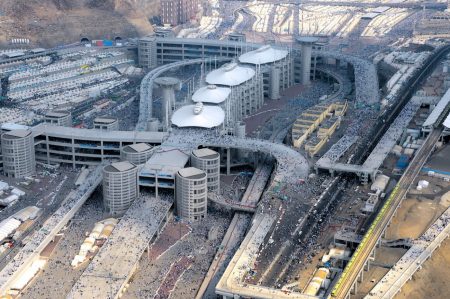


We thank Allah (SWT) for making it possible for us to visit His house and preforming umrah, for the first time. It was overwhelming to see and touch the Kaabah for the first time.
We recommend anyone who Allah grants health and wealth to visit his house inshallah. It was an experience of a life time for us, and we pray to Allah (SWT) to accept our hajj and never let us forget.