


Masjid al-Ji’ranah
Table Of Content
Significance
Al-Ji’ranah is positioned between al-Ta’if and Makkah, nearer to Makkah, at a distance of approximately 26 kilometres.
In 8 AH (630 CE), the Prophet ﷺ stopped there while distributing the spoils of war from the Hawazin tribe during his return from the campaign of Hunayn. It was from this very location that he entered Ihram to perform Umrah. This Umrah marked the third out of four Umrahs that the Prophet ﷺ performed in his lifetime.
Muharrish Al-Kabi I narrated:
The Messenger of Allah left al-Ji’ranah during the night for Umrah, before entering Makkah and performing the pilgrimage. He departed during the same night, reaching al-Ji’ranah by the morning. It was as if he had spent the night there.
[Narrated in al-Tirmidhi]
He then returned to Madinah upon its completion in the month of Dhu al-Qa’dah.
History
The Battle of Hunayn
The Battle of Hunayn, also known as the Battle of Hawazin, took place at a location situated between Makkah and al-Ta’if. Following the Conquest of Makkah, numerous Arab tribes embraced Islam, rendering the remaining non-believers powerless to engage in combat against the Muslims.
However, the tribes of Hawazin and Thaqif, residing in Hunayn, remained resistant to Islam and were unwilling to submit to Muslim rule. Consequently, they opted to launch a preemptive strike against the Muslims while they were still stationed in Makkah.
Upon receiving intelligence about this imminent threat, the Messenger of Allah ﷺ mobilized an army of 12,000 soldiers. Among them, 10,000 were composed of the Ansar and Muhajirun, while the remaining 2,000 were recent converts who had embraced Islam during the Conquest of Makkah. The Muslim forces advanced towards Hunayn in preparation for the impending confrontation.
Witnessing the magnificent sight of 12,000 soldiers marching forward, some of the Companions exchanged words of confidence, believing their sheer numbers made them invincible. However, their complacency proved costly. When the soldiers of Hawazin and Thaqif launched their initial attack and the arrows from their archers descended upon the Muslims, the 2,000 recent converts fled the battlefield in fear. Witnessing this flight, the Ansar and Muhajirun also began to disperse.
When the Prophet ﷺ turned to survey the battlefield, he found only a few Muslims standing steadfast after the majority of the 12,000-man army had fled. However, this did not waver the Prophet’s ﷺ steadfastness. He then instructed his uncle, Abbas, to call out to the Ansar and Muhajirun. Upon hearing his call, they rallied and returned to the battlefield.
The determined onslaught of the Mujahidin swiftly turned the tide of battle in favour of the Muslims, transforming a potential defeat into a resounding victory. In a matter of minutes, the non-believers were either killed, captured, or compelled to retreat.
The forces of the Thaqif tribe fiercely resisted until 70 of their soldiers fell in battle. However, with the death of their flag-bearer, Uthman ibn Abd Allah, they lost all morale and abandoned the battlefield. The Messenger of Allah ﷺ emerged triumphant, and a substantial amount of war booty was seized as a result of this victory.
The Quran mentions the Battle of Hunayn:
لَقَدْ نَصَرَكُمُ ٱللَّهُ فِى مَوَاطِنَ كَثِيرَةٍۢ ۙ وَيَوْمَ حُنَيْنٍ ۙ إِذْ أَعْجَبَتْكُمْ كَثْرَتُكُمْ فَلَمْ تُغْنِ عَنكُمْ شَيْـًۭٔا وَضَاقَتْ عَلَيْكُمُ ٱلْأَرْضُ بِمَا رَحُبَتْ ثُمَّ وَلَّيْتُم مُّدْبِرِينَ ❁ ثُمَّ أَنزَلَ ٱللَّهُ سَكِينَتَهُۥ عَلَىٰ رَسُولِهِۦ وَعَلَى ٱلْمُؤْمِنِينَ وَأَنزَلَ جُنُودًۭا لَّمْ تَرَوْهَا وَعَذَّبَ ٱلَّذِينَ كَفَرُوا۟ ۚ وَذَٰلِكَ جَزَآءُ ٱلْكَـٰفِرِينَ
God has helped you [believers] on many battlefields, even on the day of the Battle of Hunayn. You were well pleased with your large numbers, but they were of no use to you: the earth seemed to close in on you despite its spaciousness, and you turned tail and fled. Then God sent His calm down to His Messenger and the believers, and He sent down invisible forces. He punished the disbelievers- this is what the disbelievers deserve.
[Surah al-Tawbah, 9:25-26]
Many of the disbelievers who fled the battlefield sought refuge in the forts of Awtas and al-Ta’if. Therefore, it became imperative to capture these forts to rout the non-believers.
The Battle of al-Awtas
The Battle of Awtas unfolded with the Messenger of Allah ﷺ dispatching a battalion under the leadership of Abu Amir (Ubayd ibn Sulaym) al-Ash’ari I. Upon encountering an army of thousands commanded by Durayd ibn al-Simmah, both sides engaged in a fierce exchange of arrows. Tragically, Abu Amir al-Ash’ari was fatally struck in the thigh by an arrow fired by Durayd’s son, Salamah.
Witnessing his uncle’s injury, Abu Musa al-Ash’ari I rushed to his side, asking who had fired the arrow. With his final breaths, Abu Amir gestured towards the disbelieving soldier who had inflicted the wound. Immediately, Abu Musa pursued the assailant, relentlessly chasing him down and eventually slaying him.
Returning to his uncle, Abu Musa removed the arrow from his thigh, only to discover it had been poisoned, resulting in the martyrdom of Abu Amir al-Ash’ari. Before breathing his last, Abu Amir appointed Abu Musa as the leader of the Muslim army, instructing him to convey his greetings to the Prophet ﷺ and to request his supplications.
During the battle, Abu Musa became the flag-bearer and killed the son of Durayd ibn al-Simmah. Durayd, who was in a howdah chair due to his old age, was apprehended and killed with his own sword. Subsequently, the non-believers surrendered.
The Siege of al-Ta’if
The Siege of al-Ta’if became necessary to confront the non-believers who had sought refuge in the fortresses of Awtas and al-Ta’if after fleeing from the Battle of Hunayn. While those who sought refuge in Awtas had already surrendered, the Muslims turned their attention to al-Ta’if.
Al-Ta’if was a formidable, heavily fortified city surrounded by reinforced boundary walls. It was led by Urwah ibn Mas’ud al-Thaqafi, the son-in-law of Abu Sufyan L. The inhabitants of al-Ta’if, the Banu Thaqif, were renowned for their nobility, merit, and military prowess, akin to the Quraysh.
Deep within al-Ta’if lay a well-protected fortress stocked with a year’s worth of provisions. Despite the Muslims laying siege to the city, they were unable to breach the fortress due to the relentless volleys of arrows unleashed upon them.
The siege persisted for 18 days, yet no progress was made. The Messenger of Allah ﷺ then convened a meeting with Muslim strategists. After hearing that the Banu Thaqif posed no significant threat, the Prophet ﷺ ordered the lifting of the siege.
During the siege, many Muslims sustained injuries, and approximately 12 Companions were martyred, including seven from Quraysh, four from the Ansar, and one from the Banu Layth. Among the wounded was Abdullah ibn Abu Bakr I, struck by an arrow. Although his wound initially healed, it resurfaced later, ultimately leading to his passing during the caliphate of his father, Abu Bakr al-Siddiq I.
On their return journey from al-Ta’if, the Companions implored the Messenger of Allah ﷺ to supplicate for the destruction of the Thaqif tribe. He raised his blessed hands and prayed:
O Allah! Guide the Thaqif tribe to Islam and bring them to me.
Like all the du’as of the Prophet ﷺ, this supplication was accepted. Later, a delegation from the Thaqif tribe came to Madinah, where they embraced Islam.
War Booty
After lifting the siege on al-Ta’if, the Prophet ﷺ proceeded to al-Ji’ranah, where a substantial amount of war booty had been amassed. This included 24,000 camels, over 40,000 sheep, a considerable quantity of silver, and 6,000 prisoners of war.
Regarding the prisoners of war, the Messenger of Allah ﷺ instructed that their relatives be given time to come and redeem them. However, when no one came forward, he directed that the war booty be distributed. The leaders of Makkah and its surrounding areas, who had recently embraced Islam, were allocated a generous portion of sheep and camels, with some receiving between 100 and 300 animals each.
The Ansaar
Some of the young Ansar expressed discontent, feeling overlooked in the distribution of war booty. They believed they had contributed significantly to battles but received less than others. When the Messenger of Allah ﷺ learned of this, he called the Ansar to gather and address their concerns.
He reminded them of their state before Islam, how they were guided and unified through him, and how Allah enriched them through his efforts. The Ansar acknowledged the immense favour of Allah and His Messenger ﷺ upon them. The Prophet ﷺ then asked if they would be happy to return home with him, despite others returning with spoils of war. He asked:
O Ansar! Are you not satisfied and content knowing that while others come back with the spoils of war, you will return to your homes with the Messenger of Allah? I swear by Allah, the blessings you will carry away with you (embodied in the presence of the Messenger of Allah ﷺ) are of much greater worth than what they have received!
Overwhelmed, the Ansar wept, expressing their devotion to him. They said:
O Messenger of Allah, we are joyful and satisfied with you! Our only wish is for Allah and His Messenger ﷺ!
The Prophet ﷺ explained that he granted more war booty to the new Muslims of Makkah to strengthen their faith. He expressed his deep connection and loyalty to the Ansar, stating that if he had not been commanded to migrate, he would have been one of them. He prayed for the mercy of Allah upon the Ansar, their children, and their descendants.
Umrah from Ji’ranah
Before setting off for Umrah, the prisoners of war who were captured earlier were released.
The Prophet ﷺ entered into the state of Ihram from al-Ji’ranah and then proceeded to Makkah to perform Umrah. Upon completing the Umrah, he returned to Madinah in the month of Dhu al-Qa’dah, 8 AH.
Sanctity of al-Ji’ranah
Shaykh Abd al-Haqq al-Muhaddith al-Dehlawi, in his work Akhbar al-Akhyar, recounts that his Shaykh, Abd al-Wahhab al-Muttaqi, strongly recommended that people don the Ihram for Umrah at al-Ji’ranah. Abd al-Wahhab al-Muttaqi further emphasized the sanctity of al-Ji’ranah, recounting that on one occasion when he spent a night there, he was blessed with the vision of the Messenger of Allah ﷺ 100 times. It was a regular practice of Shaykh Abd al-Wahhab al-Muttaqi to fast and journey on foot to al-Ji’ranah to enter into Ihram for Umrah.
According to Maliki, Shafi’i and Hanbali schools, al-Ji’ranah is the best place to enter into Ihram in order to perform Umrah from Makkah.

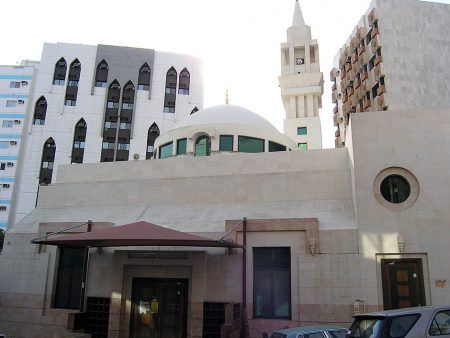


Alhamdulillah I went to majis al Je’ranah for mikat to perform umrah. Its a beautiful masjid.
Masha Allah
Appreciated eternally
MASHALLAH